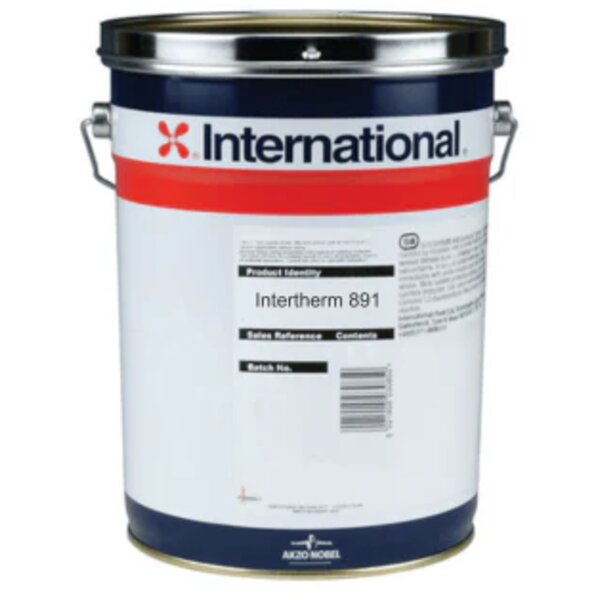
What is UNY MARINE HS M PART A and why choose it?
UNY MARINE HS M PART A is the base component of a high-solids, high-build polyurethane finish from Chugoku. Based on acrylic polyol and non-yellowing poly-isocyanates, it is designed as a durable glossy topcoat for demanding industrial and marine environments. When mixed with its dedicated hardener, it delivers long-term gloss and colour retention, strong mechanical resistance and excellent adhesion to properly prepared primers.
This base is suitable for professional coating systems on steel structures, bridges, wind turbines, chemical and petrochemical plants, power generation facilities and other metal structures where a tough, chemically resistant polyurethane finish is required.
Main features
- High-solids, high-build polyurethane finish for efficient film build and reduced number of coats.
- Excellent durability while maintaining a tough paint film over long service periods.
- Outstanding weather and UV resistance with gloss and colour retention and resistance to yellowing.
- Very good adhesion to compatible preceding coats such as BANNOH, UMEGUARD, EPICON and CMP FLAMECHECK SS-2800 series.
- Robust mechanical properties including toughness, impact and abrasion resistance.
- Excellent resistance to oil and chemicals, suitable for industrial, chemical and petrochemical environments.
- Recoatable within specified overcoating intervals for system building and maintenance.
- Wide colour availability including white and colours to specification, with a glossy finish.
Technical characteristics
Product type and use
- Type: Polyurethane finish paint, high build (two-pack system; Part A is the base).
- Recommended uses (marine TDS): Glossy finish coat on outside of superstructure, deck and fittings.
- Recommended uses (protective TDS): Finish coat for chemical, petrochemical and power plants, bridges, wind turbines and other steel structures.
Physical data (mixed product)
- Colour: White and colours as specified.
- Finish: Glossy.
- Volume solids: 66 ±2 % (ISO 3233:1998).
- VOC (theoretical): 314 g/l.
- Flash point (mix): 16 °C.
- Relative density (SDS): 1.2 – 1.5 at 20 °C (ASTM D1475-98).
- Kinematic viscosity (SDS): 492 mm²/s at 40 °C (ISO 3219), thixotropic non-Newtonian liquid.
Mixing and thinning
- Mixing ratio (by volume): Base 88 : Hardener 12.
- Mixing ratio (by weight): Base 90 : Hardener 10.
- Thinner: URETHANE THINNER A.
- Thinning range: 0 – 15 % by volume.
- Mixing instructions: Add the hardener to the base while mixing and stir well before use.
- Note on hardener performance: The hardener reacts with moisture and its performance decreases after opening; handle with care.
Application conditions
- Application methods: Airless spray, brush, roller.
- Minimum application temperature: -5 °C.
- Maximum relative humidity: 85 % RH.
Airless spray parameters
- Tip size: Graco 515, 615, 715.
- Paint output pressure: 14.7 – 23.5 MPa.
Film thickness and theoretical spreading rate
- Wet film thickness: 76 – 114 µm per coat.
- Dry film thickness: 50 – 75 µm per coat.
- Theoretical spreading rate: 13.2 – 8.8 m²/l per coat (depending on DFT).
Drying times and overcoating intervals (at 70 µm DFT)
- -5 °C: Surface dry 3.5 h; hard dry 60 h; minimum overcoating interval 60 h; maximum overcoating interval: * (consult CMP sales office or painting specification).
- 0 °C: Surface dry 2 h; hard dry 40 h; minimum overcoating interval 40 h; maximum: *.
- 5 °C: Surface dry 1 h; hard dry 24 h; minimum overcoating interval 24 h; maximum: *.
- 10 °C: Surface dry 40 min; hard dry 12 h; minimum overcoating interval 12 h; maximum: *.
- 20 °C: Surface dry 30 min; hard dry 8 h; minimum overcoating interval 8 h; maximum: *.
- 30 °C: Surface dry 20 min; hard dry 6 h; minimum overcoating interval 6 h; maximum: *.
- Induction time (all temperatures): 30 min.
- Typical pot life (mixed product): 24 h at -5, 0 or 5 °C; 20 h at 10 °C; 16 h at 20 °C; 8 h at 30 °C.
Compatible coatings
- Preferred primers / preceding coats: BANNOH series, UMEGUARD series, EPICON series, CMP FLAMECHECK SS-2800.
- Preferred subsequent coating: Consultar ficha técnica del fabricante.
- Packing: Two-pack product (base + hardener).
Surface preparation
- The surface must be clean and free from rust, dirt, oil, grease or other contaminants.
- Clean using power wash, detergent or solvent wipe as appropriate.
Applications and use cases
Marine and offshore
- Glossy finish on ship superstructures, decks and fittings.
- Topcoat over compatible anticorrosive systems in marine environments.
Industrial and infrastructure
- Finish coat for chemical, petrochemical and power plants.
- Bridges, wind turbines and heavy steel structures requiring high durability and UV resistance.
- Structures exposed to oils and various chemicals where a tough, abrasion-resistant polyurethane is required.
FAQ
-
Is UNY MARINE HS M PART A a single-pack or two-pack product?
It is part of a two-pack system. Part A (base) must be mixed with the specified hardener before use.
-
What is the correct mixing ratio for the base and hardener?
The recommended mixing ratio is 88:12 by volume (base:hardener) or 90:10 by weight.
-
Which thinner should be used?
Use URETHANE THINNER A, with a thinning range of 0–15 % by volume as required by application conditions.
-
Can it be applied by brush and roller, or is airless spray mandatory?
It can be applied by airless spray, brush or roller, according to the technical data.
-
What is the recommended dry film thickness per coat?
The recommended dry film thickness per coat is 50–75 µm.
-
What are the typical drying times at 20 °C?
At 20 °C and 70 µm DFT, the coating is surface dry in about 30 minutes and hard dry in approximately 8 hours. The minimum overcoating interval is 8 hours.
-
Is the product suitable for low-temperature application?
Yes, it can be applied down to -5 °C, provided the relative humidity does not exceed 85 % and overcoating intervals are respected.
-
On which primers can UNY MARINE HS M PART A be applied?
Preferred preceding coats include BANNOH, UMEGUARD, EPICON and CMP FLAMECHECK SS-2800 series.
-
What is the VOC content of the mixed paint?
The theoretical VOC content is 314 g/l.
-
Is the mixed product classified as flammable?
Yes. According to the SDS, it is classified as “Flammable liquid and vapour” (Flam. Liq. 3, H226).
Section 14 – Transport information
- UN number: UN 1263.
- Proper shipping name: PAINT.
- Transport hazard class: Class 3 (flammable liquid).
- Packing group: III.
- ADR/RID/ADN: UN 1263, Class 3, PG III; carriage in accordance with 2.2.3.1.5 for viscous substances up to 450 litre packs.
- IMDG: UN 1263, Class 3, PG III; viscous substances up to 30 litre packs under 2.3.2.5 of the IMDG Code; not classified as a marine pollutant.
- IATA: UN 1263, Class 3, PG III; the “viscosity exemption” does not apply to air transport.
- Transport within user’s premises: Always transport in closed, upright and secure containers. Ensure personnel know what to do in case of accident or spillage.
Section 8 – Personal protective measures
General exposure controls
- Provide adequate ventilation using local exhaust and general extraction to keep solvent vapour and spray mist below occupational exposure limits.
- Avoid inhalation of vapours, spray mist and sanding dust.
- Prevent the product from entering drains or watercourses.
Respiratory protection
- If exposure may exceed limits, use a respirator conforming to EN 140 with a combined particulate and vapour filter to EN14387 and an assigned protection factor of at least 10 (for example A2P3).
- During spray application in booths where ventilation is insufficient, use compressed air-fed respiratory protection until vapour and particulate levels are below exposure limits.
Hand protection
- Use chemical-resistant gloves tested according to EN 374.
- Polyethylene (PE) and polyvinyl alcohol (PVA) gloves are indicated in the SDS for high protection, with minimum thickness around 0.062 mm for PE and 0.2–0.3 mm for PVA (depending on exposure time).
- Nitrile gloves provide good protection during spray application; Viton gloves are suitable for intense solvent contact.
- Glove breakthrough time should exceed the actual working time; replace gloves at first sign of damage.
- PE gloves may be used as under-gloves in difficult situations such as high or unknown exposure.
Eye and face protection
- Wear safety eyewear tested to EN 16321 / EN 166, designed to protect against liquid splashes.
Skin and body protection
- Wear suitable protective clothing, including anti-static garments of natural fibre or high-temperature-resistant synthetic fibre (EN ISO 13688).
- Avoid repeated or prolonged skin contact; use protective creams only on clean skin before exposure.
Additional safety notes from SDS
- The product is classified as a flammable liquid and vapour and may cause drowsiness or dizziness and an allergic skin reaction; repeated exposure may cause skin dryness or cracking.
- Keep away from heat, hot surfaces, sparks and open flame. No smoking during handling or application.
- Do not use pressure to empty containers; they are not pressure vessels.
*Contenido generado por IA