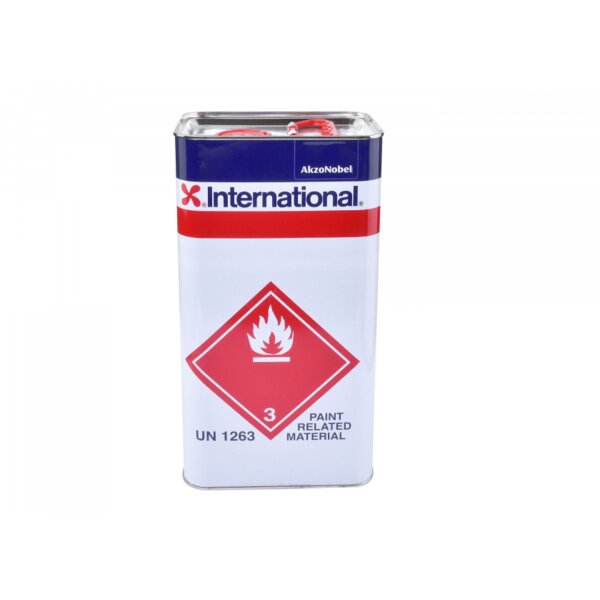
What is Interfine 979 Part A and why choose it?
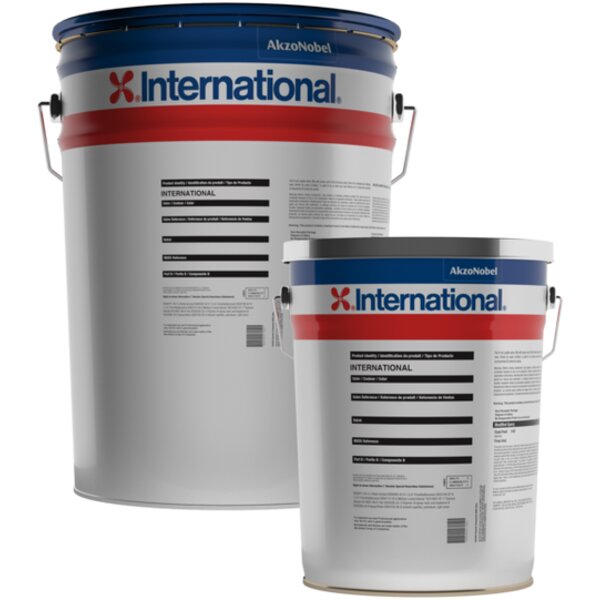
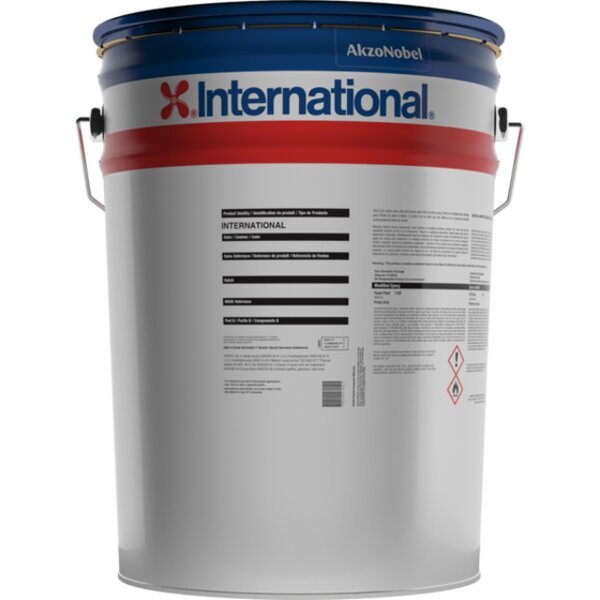
INTERFINE 979 PARTE A INDIVISIBLE KIT by International Marina is the base component (Part A) of a patented, two-component, high-solids acrylic polysiloxane finish designed for interior and exterior use. When mixed with its dedicated curing agent (Part B), it forms a high-performance inorganic hybrid coating that contains no free isocyanates and offers superior long-term colour and gloss retention compared with typical polyurethane and first-generation epoxy-modified polysiloxane finishes.
Used as part of a high-performance anti-corrosive system, Interfine 979 delivers extended durability to first maintenance while combining excellent cosmetic appearance with barrier protection similar to a traditional epoxy intermediate. This dual function can reduce the total number of coats in multi-coat systems, improving productivity and lowering application time.
Main features
- High-performance acrylic polysiloxane finish with patented inorganic hybrid technology (US 6,281,321 and EP 0 941290).
- Two-component, high-solids system that forms a durable protective and decorative topcoat when mixed with the correct curing agent.
- No free isocyanates in the formulation.
- Excellent long-term colour and gloss retention, outperforming typical polyurethane finishes and first-generation epoxy-modified polysiloxanes.
- Corrosion-resistant barrier coat with enhanced mechanical properties compared with traditional epoxy technology.
- High cosmetic standard ideal where visual impact is critical, with a typical gloss level of 76%.
- Flexible application by airless spray, conventional air spray, brush or roller.
- Wide colour availability via the Chromascan tinting system.
- Extended overcoating intervals with recommended topcoats, simplifying maintenance planning.
- For professional and industrial use only, in accordance with applicable health, safety and environmental regulations.
Technical specifications
General data
- Product type: Acrylic polysiloxane, high-solids inorganic hybrid finish.
- Components: Two (this item is Part A – base component).
- Use: Two component coating for interior and exterior use.
- Colour range: Wide range via the Chromascan system.
- Gloss level: Gloss (approx. 76%).
- Volume solids: 76% (approx.).
Film thickness and coverage
- Typical dry film thickness (DFT): 100–150 microns (4–6 mils).
- Corresponding wet film thickness (WFT): 132–197 microns (5.3–7.9 mils).
- Theoretical coverage: 6.08 m²/litre at 125 microns DFT (244 sq.ft/US gallon at 5 mils DFT).
- Practical coverage: Allow appropriate loss factors depending on application method and conditions.
Drying and overcoating (standard curing agent)
Conditions quoted at 50% relative humidity.
| Substrate temperature |
Touch dry |
Hard dry |
Minimum overcoating interval with recommended topcoats |
Maximum overcoating interval with recommended topcoats |
| 5°C (41°F) |
6 hours |
8 hours |
8 hours |
Extended |
| 15°C (59°F) |
4.5 hours |
6 hours |
6 hours |
Extended |
| 25°C (77°F) |
3 hours |
4 hours |
4 hours |
Extended |
| 40°C (104°F) |
1.5 hours |
2.5 hours |
2.5 hours |
Extended |
An alternative curing agent is available to improve workability in warmer climates (>25°C) and/or high relative humidity (>60%). See Product Characteristics of the full technical data sheet for details.
Mixing and pot life (Part A + curing agent)
- Mix ratio (by volume): 4 parts Part A : 1 part Part B.
- Mixing procedure:
- Agitate Base (Part A) with a power agitator.
- Combine the entire contents of Curing Agent (Part B) with Part A and mix thoroughly with a power agitator.
| Temperature |
Working pot life |
| 5°C (41°F) |
3.5 hours |
| 15°C (59°F) |
2.5 hours |
| 25°C (77°F) |
2 hours |
| 40°C (104°F) |
1.5 hours |
Pot life times apply to both curing-agent grades. Once mixed, material must be used within the stated pot life, even if it still appears liquid and usable.
Application
- Recommended methods: Airless spray, conventional air spray, brush, roller.
- Airless spray:
- Tip range: 0.28–0.53 mm (11–21 thou).
- Minimum fluid pressure at tip: 155 kg/cm² (2204 psi).
- Conventional air spray:
- Gun: DeVilbiss MBC or JGA.
- Air cap: 704 or 765.
- Fluid tip: E.
- Brush and roller: Suitable; typically 50–75 microns (2.0–3.0 mils) DFT per coat can be achieved. Multiple coats may be required to reach the specified system DFT.
- Thinner: International GTA007 (do not thin beyond local environmental limits).
- Cleaner: International GTA007.
Surface preparation
- All surfaces must be clean, dry and free from contamination, prepared in accordance with ISO 8504:2000.
- Primed surfaces: Always apply Interfine 979 over a recommended anti-corrosive scheme. Apply within the specified overcoating interval of the primer. Areas of breakdown or damage should be prepared to at least Sa2½ (ISO 8501-1:2007) or SSPC-SP10 (abrasive blasting) or SSPC-SP11 (power tool cleaning) and patch-primed before applying Interfine 979.
- Metallic zinc primers: Ensure the surface is clean, dry and free from contamination and zinc salts. Zinc primers must be fully cured before overcoating.
- Surface temperature must be at least 3°C (5°F) above the dew point.
System compatibility
Interfine 979 can be applied over a limited range of primers and intermediates.
- Suitable primers: Intercure 200, Intercure 200HS, Interzinc 52, Interzinc 52HS, Interzinc 315, Interzinc 22, Interplus 356.
- Suitable intermediates: Intercure 420, Intergard 475HS, Interseal 670HS, Interzone 505, Interzone 954.
- Do not apply Interfine 979 directly over Interzinc 52 low temperature cure grade.
- Absolute maximum overcoating intervals depend on the primer/intermediate. Interfine 979 should normally only be overcoated with itself.
Physical and regulatory data (Part A mixed product data where stated)
- Flash point (typical): Part A 32°C (90°F); Part B 55°C (131°F); mixed 35°C (95°F).
- Product weight (mixed): 1.33 kg/litre (11.1 lb/gal).
- VOC (typical):
- 1.81 lb/gal (218 g/l) – EPA Method 24.
- 162 g/kg – EU Solvent Emissions Directive (Council Directive 2010/75/EU).
- 176 g/l – Chinese National Standard GB23985.
Packaging and storage
- Standard pack sizes:
- 20 litre unit: Part A 16 litres (in 20 litre pack); Part B 4 litres (in 5 litre pack).
- 5 US gallon unit: Part A 4 US gal (in 5 US gal pack); Part B 1 US gal (in 1 US gal pack).
- Typical shipping weight:
- 20 litre unit: Part A 24.3 kg; Part B 4.4 kg.
- 5 US gal unit: Part A 49.6 lb; Part B 8.8 lb.
- Shelf life (unopened at 25°C / 77°F):
- Part A: minimum 12 months.
- Part B: minimum 6 months, subject to re-inspection thereafter.
- Storage conditions: Store in dry, shaded conditions, away from sources of heat and ignition. Keep containers tightly closed.
Applications and use cases
- High-visibility infrastructure: Bridges and other exposed steel structures where long-term cosmetic appearance and durability are critical.
- Offshore and marine-related structures: Offshore platforms and associated structures where high performance and visual impact are important.
- Tank farms: External surfaces of tank farms requiring durable colour and gloss retention.
- General industrial and commercial steelwork: Structural steel in industrial plants, warehouses and commercial buildings demanding high cosmetic standards as well as corrosion protection.
This product is not recommended for use in immersion conditions. Where severe chemical or solvent splashing is likely, consult International Protective Coatings for advice on suitability.
FAQ
1. What type of coating system should Interfine 979 Part A be used in?
Interfine 979 should always be used as part of a recommended high-performance anti-corrosive coating system, applied over compatible primers and, where specified, intermediates.
2. Can Interfine 979 be applied directly to bare steel?
No. It must be applied over a suitable anti-corrosive primer. Areas of bare steel should be prepared to the specified standard and patch-primed before applying Interfine 979.
3. Which application method gives the best cosmetic finish?
The best results in terms of gloss and surface appearance are obtained with conventional air spray application.
4. Is Interfine 979 suitable for brush or roller application?
Yes, brush and roller are suitable, but multiple coats may be required to achieve the specified dry film thickness.
5. Can I use any thinner with Interfine 979?
No. Only recommended International thinners, specifically International GTA007, should be used. Thinners containing alcohols or ketones can severely inhibit curing.
6. What ambient conditions are required for curing?
Interfine 979 cures satisfactorily at relative humidities between 40% and 85%. Surface temperature must be at least 3°C (5°F) above the dew point.
7. Is the product safe for use in confined spaces?
It can be used in confined spaces only with adequate ventilation and appropriate personal protective equipment as specified in the safety data sheet.
8. Is Interfine 979 classified as hazardous?
Yes. Part A is classified as a flammable liquid (Flam. Liq. 3, H226) and can cause skin irritation, serious eye damage and skin sensitisation, and is harmful to aquatic life with long-lasting effects.
9. Who is allowed to apply this product?
The product is intended for use only by professional applicators in industrial situations, in compliance with relevant health, safety and environmental regulations.
Section 14 – Transport information
Based on the safety data sheet for Interfine 979 White Part A (for the mixed paint where applicable).
- UN number / ID number: UN1263.
- UN proper shipping name: PAINT.
- Transport hazard class: 3 (flammable liquid).
- Packing group: III.
- Environmental hazards: Not classified as marine pollutant for ADR/RID, IMDG or IATA.
- ADR/RID additional information: Tunnel code (D/E).
- IMDG additional information: Emergency schedules F-E, S-E.
- Special precautions for user: Within user’s premises, always transport in closed, upright and secure containers. Ensure personnel transporting the product know what to do in case of accident or spillage.
- Transport in bulk according to IMO instruments: Not applicable.
Section 8 – Individual protection measures
The following personal protection guidance is taken from the safety data sheet for Interfine 979 White Part A and applies to professional and industrial users. A task-specific risk assessment must always be carried out.
Engineering controls and hygiene
- Use only with adequate ventilation. Employ process enclosures, local exhaust or other engineering controls to keep airborne concentrations below recommended or statutory limits and below the lower explosive limit.
- Use explosion-proof ventilation and electrical equipment.
- Wash hands, forearms and face thoroughly after handling and before eating, drinking or smoking, and at the end of the working period.
- Remove contaminated clothing and protective equipment before entering eating areas. Wash contaminated clothing before reuse.
- Ensure eyewash stations and safety showers are located close to work areas.
Eye and face protection
- Use chemical splash goggles and/or a face shield complying with an approved standard when there is a risk of exposure to liquid splashes, mists, gases or dusts.
- If inhalation hazards exist, a full-face respirator may be required instead of separate eye protection.
Hand protection
- Wear chemical-resistant, impervious gloves complying with an approved standard whenever handling the product.
- For prolonged or frequently repeated contact, use gloves with protection class 6 (breakthrough time >480 min according to EN374). Recommended: Viton or nitrile gloves with thickness ≥ 0.38 mm.
- For brief contact, use gloves with protection class 2 or higher (breakthrough time >30 min according to EN374). Recommended: nitrile gloves with thickness ≥ 0.12 mm.
- Replace gloves regularly and immediately if damaged. The user must ensure the glove type selected is suitable for the actual conditions of use.
Skin and body protection
- Select personal protective clothing based on the specific task and risks and have it approved by a specialist.
- Where there is a risk of ignition from static electricity, wear anti-static protective clothing including anti-static overalls, boots and gloves, in accordance with EN 1149.
- Use suitable footwear and any additional skin protection required, as defined by the risk assessment.
Respiratory protection
- Select a respirator that meets the appropriate standards or certifications and use it as part of a formal respiratory protection programme.
- Recommended: respirator conforming to EN140 with type A/P2 filter or better.
- Dry sanding, flame cutting and/or welding of the dry paint film can generate hazardous dust and fumes. Prefer wet sanding/flatting where possible. If adequate local exhaust ventilation cannot be provided, use suitable respiratory protective equipment.
Environmental exposure controls
- Check emissions from ventilation and process equipment to ensure compliance with environmental legislation.
- Where necessary, install fume scrubbers, filters or modify process equipment to reduce emissions to acceptable levels.
*Contenido generado por IA