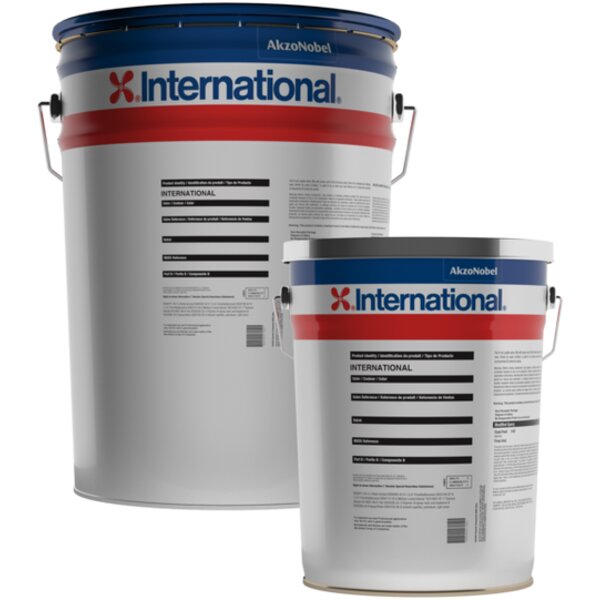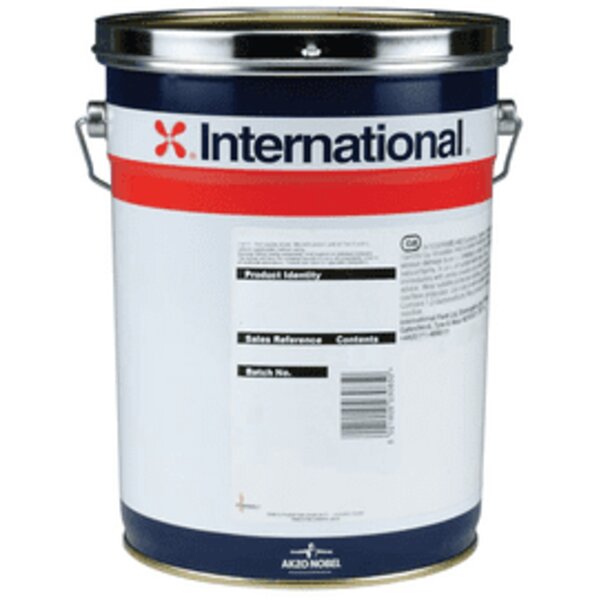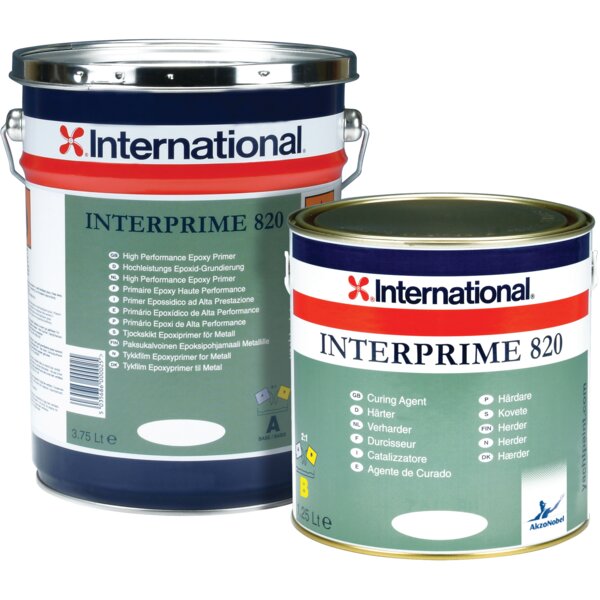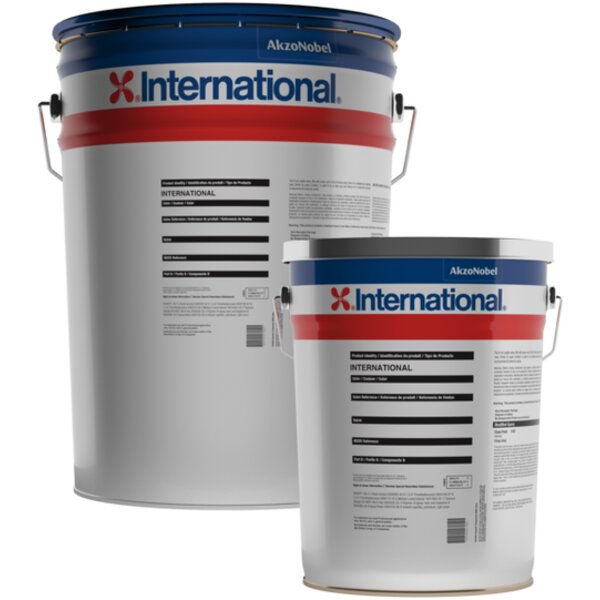
INTERZONE 954 PART A INDIVISIBLE KIT

FROM:

Regular price 70,72€

*VAT not included

INTERZONE 954 Part A is the base component of a two-component, low VOC, high solids modified epoxy barrier coating designed to provide long-term protection in single coat applications on steel substrates. It is surface tolerant, continues to cure under water and is suitable for demanding maintenance environments such as offshore splash zones and other corrosive industrial areas.

*Contenido generado por IA

    Presentation: Container
    Colours:
    Mixing ratio: 4 Partes Base 1 Parte Catalizador
    Base: INTERZONE 954 PART A INDIVISIBLE KIT
    Catalizador: INTERZONE 954 PART B INDIVISIBLE KIT
    Solvent:: THINNER GTA 007

Features

    Presentation: Container
    Colours:
    Mixing ratio: 4 Partes Base 1 Parte Catalizador
    Base: INTERZONE 954 PART A INDIVISIBLE KIT
    Catalizador: INTERZONE 954 PART B INDIVISIBLE KIT
    Solvent:: THINNER GTA 007

description

What is Interzone 954 Part A and why choose it?

INTERZONE 954 PART A INDIVISIBLE KIT from International Marina is the base component of a two‑component, high solids, low VOC modified epoxy barrier coating. When combined with its curing agent, it delivers long-term corrosion protection in a single, high-build coat. The coating continues to cure while immersed in water, offers excellent resistance to cathodic disbondment and is surface tolerant, making it ideal for demanding maintenance and repair work on steel structures.

Originally developed for offshore splash zone maintenance, Interzone 954 is now widely used in many aggressive industrial and marine environments where high durability, fast return to service and minimal downtime are critical.

Main features

  • Two-component modified epoxy barrier coat for long-term protection of steel in severe environments.
  • High solids, low VOC formulation to support regulatory compliance (EU, US EPA, China VOC values provided).
  • Single-coat high-build performance with typical dry film thickness from 250 to 500 microns (10–20 mils).
  • Cures under immersion and can be immersed within 30 minutes when applied between tides on jetties and piling.
  • Excellent cathodic disbondment resistance and compatibility with sacrificial and impressed current cathodic protection systems.
  • Surface tolerant – can be applied to suitably prepared re-oxidised and slightly damp steel surfaces.
  • High gloss finish (85% ± 3% depending on colour) for easy inspection.
  • Wide application window via airless spray, conventional air spray, brush or roller.
  • Optional non-slip deck system when used with GMA132 crushed flint aggregate.
  • Part A Grey indivisible kit supplied for professional and industrial use only.

Technical specifications

  • Product type: Modified epoxy barrier coating, two-component (this item is Part A – base).
  • Intended use: Two component coating for interior and exterior use; designed for offshore splash zone maintenance and other highly corrosive environments.
  • Colour range: Range available via the Chromascan system; this part is supplied as Grey Part A.
  • Gloss level: Gloss, 85% ± 3% (depending on colour).
  • Volume solids: 85% ± 3%.
  • Typical dry film thickness (DFT): 250–500 microns (10–20 mils) per coat.
  • Typical wet film thickness (WFT): 294–588 microns (11.8–23.5 mils).
  • Theoretical coverage: 1.70 m²/litre at 500 microns DFT with stated volume solids (68 sq.ft/US gallon at 20 mils DFT).
  • Practical coverage: Allow appropriate loss factors depending on application method and surface profile.
  • Recommended application methods: Airless spray (preferred for maximum film build), air spray, brush, roller.
  • Mix ratio (Part A : Part B): 4 parts : 1 part by volume, mixed as a complete unit.
  • Working pot life with EAA984 curing agent:
    • 10°C (50°F): 2 hours
    • 15°C (59°F): 60 minutes
    • 25°C (77°F): 45 minutes
    • 40°C (104°F): 20 minutes
  • Drying and overcoating times with EAA984 curing agent (typical):
    • -5°C (23°F): touch dry 22 h; hard dry 48 h; overcoat 48 h (min) to 14 days (max).
    • 5°C (41°F): touch dry 21 h; hard dry 40 h; overcoat 40 h (min) to 14 days (max).
    • 10°C (50°F): touch dry 14 h; hard dry 16 h; overcoat 16 h (min) to 10 days (max).
    • 25°C (77°F): touch dry 3.5 h; hard dry 5.5 h; overcoat 5.5 h (min) to 7 days (max).
    • 40°C (104°F): touch dry 90 min; hard dry 3 h; overcoat 3 h (min) to 5 days (max).
  • Alternative curing agent EAA964 (selected data): do not apply at steel temperatures below 4°C (39°F); see technical data sheet for full drying and pot life information.
  • Minimum DFT recommendations:
    • Atmospheric exposure (direct to steel): ≥ 350 microns (14 mils) in one coat.
    • Water immersion: ≥ 450 microns (18 mils) in one coat.
  • Density (mixed product): 1.62 kg/l (13.5 lb/gal).
  • Flash point (typical): Part A 37°C (99°F); Part B 37°C (99°F); Mixed 37°C (99°F).
  • VOC (typical):
    • 1.87 lb/gal (225 g/l) – EPA Method 24.
    • 151 g/kg – EU Solvent Emissions Directive (Council Directive 2010/75/EU).
    • 133 g/l – Chinese National Standard GB23985.
  • Storage & shelf life: minimum 24 months at 25°C (77°F), subject to re‑inspection thereafter. Store in dry, shaded conditions away from heat and sources of ignition.
  • Typical pack sizes (Part A): 20 litre pack containing 16 litres of product; 5 US gallon pack containing 4 US gallons of product.
  • Approximate shipping weight (Part A): 30.4 kg for 20 litre unit; 56.4 lb for 5 US gallon unit.
  • Service suitability: suitable for steelwork under atmospheric exposure, water immersion and buried conditions (Im3 according to ISO 12944‑2) when correctly specified and applied.

Applications and typical use cases

Primary design purpose

  • Offshore splash zone maintenance: specifically formulated for structures exposed to tidal movements and wave action, where continuous curing under immersed conditions is essential.

Additional corrosive environments

  • Rail cars and rolling stock exposed to mechanical damage and weather.
  • Pulp and paper plants with moist, chemically aggressive atmospheres.
  • Chemical plants where robust barrier protection against spills and fumes is required.
  • Jetties, piers and piling in marine and harbour environments.
  • Sluice gates and similar hydraulic structures subject to cyclic immersion.

Non-slip deck systems

  • Can be used as part of a non-skid deck system by adding GMA132 crushed flint aggregate.
  • Application onto a suitably primed surface with typical system thickness of 500–1,000 microns (20–40 mils).
  • Preferred application via large-tip hopper gun (e.g. Sagola 429 or suitable air texture gun with 5–10 mm nozzle); trowel or roller for small areas or broadcast methods where specified.

FAQ

  1. Is Interzone 954 suitable for single-coat applications?

    Yes. When applied by airless spray, Interzone 954 is designed to achieve the recommended high-build dry film thickness in a single coat for both atmospheric and immersion service.

  2. Can it be applied to damp or re-oxidised steel?

    Yes. The coating is surface tolerant and may be applied to suitably prepared re‑oxidised and slightly damp surfaces, provided surface preparation standards (e.g. Sa2 or Sa2½, St3) are met.

  3. What surface preparation is required?

    Performance depends strongly on surface preparation. Typically, abrasive blast cleaning to Sa2½ (ISO 8501‑1) or SSPC‑SP6 with a profile of 50–75 microns (2–3 mils) is recommended. Hand or power tool cleaning to St3 is acceptable for atmospheric exposure only.

  4. Does the colour change in service?

    Like all epoxies, Interzone 954 will chalk and discolour on exterior exposure. Early exposure to ponding water may also cause colour changes, especially in dark colours, but this does not affect anticorrosive performance.

  5. Can it be overcoated and with which products?

    Yes. Recommended primers include Intercure 200/200HS, Intergard 251, Interzinc 52, Interzinc 315, Interzone 1000 and others for specific services. Recommended topcoats include Interfine 629HS/878/979, Intergard 740, Interthane 870/990/990E, Intersleek 167 and Interzone 954 itself, within specified overcoating intervals.

  6. Is the product compatible with cathodic protection systems?

    Yes. Interzone 954 is compatible with both sacrificial anode and impressed current cathodic protection systems.

  7. What happens if the coated surface is immersed quickly after application?

    When applied between tides on jetties and piling, the coating can be immersed within 30 minutes. Dark colours may whiten, but this does not reduce long-term anticorrosive performance.

  8. What is the recommended minimum steel temperature for application?

    Steel temperature must be at least 3°C (5°F) above the dew point, and not below 4°C (39°F) when using the EAA964 curing agent. Adequate ventilation and airflow are required during application and curing.

  9. Is this product for professional use only?

    Yes. Both the technical data sheet and Safety Data Sheet specify Interzone 954 as intended for use only by professional applicators in industrial situations.

Section 14 – Transport information

  • UN number (ADR/RID, IMDG, IATA): UN1263.
  • UN proper shipping name: PAINT.
  • Transport hazard class: Class 3 (flammable liquids).
  • Packing group: III.
  • Environmental hazards: Not classified as dangerous for the environment for transport purposes (no marine pollutant indication).
  • Tunnel restriction code (ADR/RID): D/E.
  • IMDG emergency schedules: F‑E, S‑E.
  • Special precautions for user: within user premises, always transport in closed, upright and secure containers. Ensure that personnel moving the product know the procedures to follow in case of accident or spillage.
  • Transport in bulk according to IMO instruments: Not applicable.

Section 8 – Individual protection measures

The following guidance is extracted from the Safety Data Sheet for Interzone 954 Grey Part A and is intended for professional users implementing risk assessments and safe systems of work.
General hygiene measures

  • Prohibit eating, drinking and smoking in areas where the product is handled or stored.
  • Wash hands, forearms and face thoroughly after handling and before breaks.
  • Remove contaminated clothing and protective equipment before entering eating areas; wash contaminated clothing before reuse.
  • Ensure eyewash stations and safety showers are located close to the work area.

Eye and face protection

  • Use chemical splash goggles meeting an approved standard when there is a risk of splashes, mists or aerosols.
  • Where the risk assessment indicates, select higher levels of protection accordingly.

Hand protection

  • Wear chemical‑resistant, impervious gloves complying with EN374 or equivalent.
  • For prolonged or frequently repeated contact: gloves with protection class 6 (breakthrough time > 480 min) are recommended. Suitable materials: Viton® or nitrile, thickness ≥ 0.38 mm.
  • For brief contact: gloves with protection class ≥ 2 (breakthrough time > 30 min) are recommended. Suitable material: nitrile, thickness ≥ 0.12 mm.
  • Replace gloves regularly and immediately if damaged; performance may be reduced by physical or chemical damage or poor maintenance.

Skin and body protection

  • Select personal protective clothing based on task and exposure risk; approval by a safety specialist is recommended.
  • When there is a risk of ignition from static electricity, use anti‑static protective clothing (overalls, boots and gloves) in accordance with EN 1149.
  • Use appropriate footwear and, where necessary, additional skin protection such as chemical‑resistant coveralls or aprons.

Respiratory protection

  • Use only with adequate local exhaust or general ventilation; engineering controls should keep airborne concentrations below applicable limits and below lower explosion limits.
  • Where ventilation is insufficient, wear a respirator conforming to EN140 with type A/P2 filter or better, selected within a formal respiratory protection programme.
  • Dry sanding, flame cutting or welding of the dry paint film can generate hazardous dust and fumes; wet sanding/flatting is preferred. If exposure cannot be avoided, suitable respiratory protection must be used.

Environmental exposure controls

  • Check emissions from ventilation and process equipment to ensure compliance with environmental regulations.
  • Use fume scrubbers, filters or engineering modifications as required to reduce emissions to acceptable levels.

Contenido generado por IA

TECHNICAL SHEET

TECHNICAL SHEET

link

SAFETY DATA SHEETS

SAFETY DATA SHEETS

link
Ref. Colour Capacity Amount*
EAA951/20LT/EU Grey 16 l 248,64 €
EAA957/20LT/EU Light Yellow 16 l 341,54 €
EAA959/20LT/EU Black 16 l 272,39 €
EAC938/5LT/EU Gentian Blue RAL 5010 4 l 88,78 €
EAD704/5LT/EU Light Grey RAL 7035 4 l 70,72 €
EAH000/20LT/EU Flotilla 16 l 269,24 €
EAI605/20LT/EU Jet Black RAL 9005 16 l 341,54 €
EAJ019/20LT/EU Pebble Grey RAL 7032 16 l 269,24 €
EAXY44/20LT/EU Sand 16 l 269,24 €
EAXY44/5LT/EU Sand 4 l 70,72 €
EAZ000/20LT/EU 16 l 269,24 €
EAZ020/5LT/EU Off White 4 l 70,72 €
Page up

Product Quick View Popup

Vendor: Optimal

Product Type: Tops

SKU: 50-ABC

In stock Pre-order Now Sold out Order now, Only 10 left!
$400.00$300.00
Optimal Multipurpose Bootstrap 5 Html Template that will give you and your customers a smooth shopping experience which can be used for various kinds of stores such as fashion..
  • Black
  • Green
  • Orange
  • Blue
  • Red
  • XS
  • S
  • M
  • L
  • XL

Added to your shopping cart successfully.

Added to your shopping cart successfully.
Ditsy Floral Dress

Color: Gray

1 X $113.88

Total: $113.88