What is Intergard 740 Part A and why choose it?
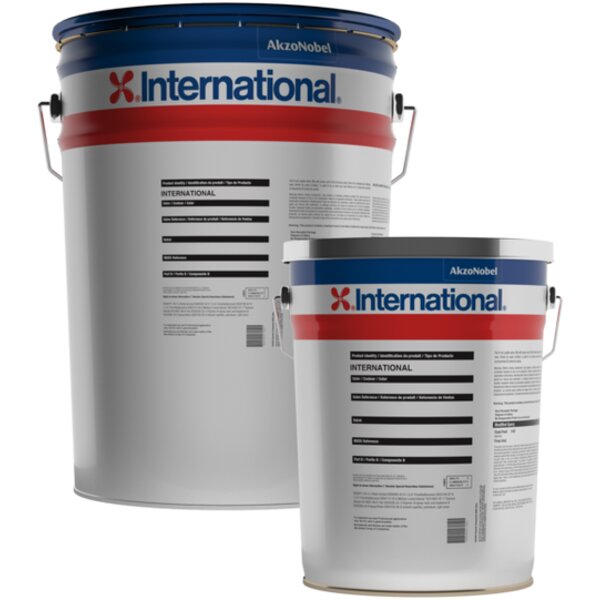
INTERGARD 740 PART A INDIVISIBLE KIT is the base component of Intergard 740, a two-pack epoxy high gloss finish designed for long-lasting protection of correctly primed surfaces above the waterline. When mixed in the prescribed 4:1 ratio with its dedicated curing agent (Part B ECA914), it forms a tough, abrasion-resistant coating that also offers good resistance to spills and splashes of a wide range of chemicals, including acids, alkalis, solvents and saline solutions.
This finish is suitable for demanding marine and industrial environments, from offshore structures and petrochemical installations to bridges, pulp and paper plants and power industry assets. It can be applied by airless spray, conventional spray, brush or roller and is available in a wide colour range, making it a versatile solution where both cosmetic appearance and durability are required.
Main features
- Two-component epoxy finish: Part A base to be used only with the specified Part B curing agent for a complete, indivisible kit.
- High gloss appearance: Provides a smooth, high-gloss finish for structures above the waterline and in industrial environments.
- Chemical and abrasion resistance: Offers good resistance to mechanical wear and to spills and splashes of selected acids, alkalis, solvents and salt solutions.
- Wide colour availability: Standard marine shades (ECB000 White, ECK724 Storm Grey, ECL274 Red, ECL549 Signal Green, ECY999 Black) plus a broad range of colours via the Chromascan tinting system.
- Versatile application methods: Can be applied by airless spray, conventional spray, brush or roller (brush/roller recommended for small areas and may require multiple coats).
- Compatible with multiple primers: Designed to be used over epoxy anticorrosive primers in both marine and protective coating systems and can also be used on suitably prepared concrete.
- Certified performance (marine version): When part of an approved scheme, holds certifications for grain carriage, surface spread of flame, smoke and toxicity, and compliance with the Marine Equipment Directive.
- Professional-grade formulation: Intended for use by trained, professional applicators in industrial and marine environments.
Technical specifications
- Product type: Two-pack epoxy finish (Part A of indivisible kit)
- Finish / sheen: High gloss
- Colour range: ECB000 White, ECK724 Storm Grey, ECL274 Red, ECL549 Signal Green, ECY999 Black and a wide range via Chromascan
- Volume solids: 51% ± 3% (depending on colour, ISO 3233)
- Recommended dry film thickness: 50 microns (2 mils)
- Corresponding wet film thickness: 98 microns (3.9 mils)
- Theoretical coverage: 10.2 m²/litre at 50 microns DFT and stated volume solids; 409 sq.ft./US gallon at 2 mils (allow appropriate loss factors)
- Mix ratio (by volume): 4 parts Part A : 1 part Part B (ECA914)
- Pot life (mixed product):
- 10°C (50°F): 11 hours
- 15°C (59°F): 10 hours
- 25°C (77°F): 8 hours
- 40°C (104°F): 2 hours
- Induction period (marine data): 30 minutes at temperatures below 25°C
- Typical drying and overcoating times (marine data, 50 µm DFT):
- 5°C: touch dry 16 h; hard dry 54 h; minimum overcoating 54 h (extended maximum)
- 10°C: touch dry 12 h; hard dry 40 h; minimum overcoating 40 h (extended maximum)
- 25°C: touch dry 3 h; hard dry 16 h; minimum overcoating 16 h (extended maximum)
- 35–40°C: touch dry 2 h; hard dry 11–12 h; minimum overcoating 11–12 h (extended maximum)
- Minimum curing temperature: Product will not cure adequately below 5°C; for maximum performance, ambient curing temperatures should be above 10°C.
- Flash point (typical): Part A 27°C; Part B 29°C; mixed 28°C
- VOC (typical):
- 3.50 lb/gal (420 g/l) as supplied (EPA Method 24)
- 344 g/kg as supplied (EU Solvent Emissions Directive 1999/13/EC)
- 416 g/l (Chinese National Standard GB23985, marine data)
- Specific gravity (protective coatings data): 1.34 kg/l (11.2 lb/US gal) – Consultar ficha técnica del fabricante.
- Recommended thinner: International GTA220 (or International GTA415 for protective use); thinning generally not required and must not exceed local environmental limits.
- Recommended cleaner: International GTA220 / GTA822 (or International GTA415 where specified).
- Application methods: Airless spray, conventional spray, brush, roller.
- Unit sizes (typical):
- 20 litre kit: Part A 16 L (in 20 L can) + Part B 4 L (in 5 L can)
- 5 US gallon kit: Part A 4 US gal (in 5 US gal can) + Part B 1 US gal (in 1 US gal can)
- Shelf life: Minimum 18 months at 25°C in unopened containers, subject to re-inspection; store dry, shaded, away from heat and ignition sources.
Applications and use cases
Typical environments
- Offshore structures
- Petrochemical installations
- Bridges and infrastructure
- Pulp and paper mills
- Power generation and electrical industry facilities
- Marine newbuilding, maintenance and repair for areas above the waterline
Substrates and primers
- Primed steel and other metals: Apply only over recommended epoxy anticorrosive primers, with the primer surface clean, dry and within the specified overcoating interval.
- Typical compatible primers (marine): Interbond 201, Intergard 269 (tie coat over Interzinc 22 on external decks), Intergard 400, Intergard 264, Intershield 300, Intershield 803, Intertuf 262, Intertuf 362.
- Concrete and precast blocks: Suitable for application to concrete which has cured for at least 28 days and has moisture content below 6%. The first coat should be thinned 10–15% with recommended thinner to promote penetration and sealing.
- As a concrete primer (protective systems): When Intergard 740 is used as a primer on concrete, suitable finishes include Interfine 629HS, Interthane 990, Intergard 740, Interline 850, Interline 944, Interseal 670HS, Interzone 505, Interzone 954 and Interzone 1000.
Surface preparation (summary)
- All substrates must be clean, dry and free from contaminants such as oil, grease, salts, curing agents, release agents, laitance, loose coatings or friable concrete.
- For primed steel, repair breakdown areas to the specified standard (e.g. Sa2½ / SSPC-SP6 abrasive blasting or SSPC-SP11 power tool cleaning) and re-prime before applying Intergard 740.
- For concrete, remove surface laitance by sweep blasting (preferred) or acid etching; remove mould oils, curing compounds and loose material.
Application guidance (summary)
- Material is supplied in two containers as a complete kit. Always mix a full unit in the supplied proportions.
- Stir Part A (base) with a mechanical mixer, then add the full contents of Part B (curing agent) and mix thoroughly.
- Maintain material between 21–27°C prior to mixing, where possible, for optimum application properties.
- Apply only when the substrate temperature is at least 3°C above the dew point and in good weather conditions.
- Do not allow mixed material to remain in hoses, guns or spray equipment during stoppages; flush thoroughly with the recommended cleaner.
- Over-application will extend minimum overcoating and handling times and may affect long-term performance.
- Like all epoxy coatings, the film will chalk on UV exposure; this does not adversely affect anticorrosive performance and is confined to a thin surface layer.
FAQ – Intergard 740 Part A
-
Is INTERGARD 740 PART A INDIVISIBLE KIT a complete paint system?
No. Part A is the base component of a two-pack epoxy system and must be mixed with the correct Part B curing agent (ECA914) in a 4:1 volume ratio. It should also be applied over suitable primers.
-
What is the recommended film thickness and coverage?
The typical dry film thickness is 50 microns (2 mils), corresponding to 98 microns (3.9 mils) wet. At this thickness the theoretical coverage is 10.2 m²/litre, or 409 sq.ft./US gallon, before allowing for losses.
-
Can Intergard 740 be applied by brush or roller?
Yes. Brush and roller application are recommended for small areas only. Multiple coats may be required to achieve the specified film thickness and a uniform appearance.
-
What is the minimum temperature for curing and overcoating?
The product will not cure adequately below 5°C. For best performance, ambient curing temperatures should be above 10°C. Minimum overcoating times depend on temperature and range from 54 hours at 5°C to 11–12 hours at 35–40°C.
-
Is Intergard 740 suitable for immersion service?
The marine technical data sheet defines Intergard 740 as a cosmetic finish coat for areas above the waterline (non-immersed service). Consultar ficha técnica del fabricante.
-
Can Intergard 740 be used directly on aged Intergard 740?
Yes. It may be applied directly over intact, tightly adherent aged Intergard 740 after thorough fresh-water washing and degreasing. Loose or flaking areas must be removed to a firm edge and repaired with appropriate primer or Intergard 740 before full recoating.
-
Does the coating chalk or change colour outdoors?
Yes. As with all epoxy-based coatings, the film will chalk and may discolour on UV exposure. This is limited to a thin surface layer and does not adversely affect corrosion protection.
-
What is the VOC content of Intergard 740 Part A?
The mixed product, as supplied, typically has a VOC of 3.50 lb/gal (420 g/l) according to EPA Method 24, and 344 g/kg under the EU Solvent Emissions Directive. Values may vary slightly with colour and manufacturing tolerances.
-
How long can unopened kits be stored?
Unopened units have a minimum shelf life of 18 months at 25°C, subject to reinspection thereafter. Store in a dry, shaded area away from heat and ignition sources.
-
Who should use this product?
The safety data sheet specifies that the product is intended for professional and industrial use only, by trained operators following relevant health, safety and environmental regulations.
Section 14 – Transport information
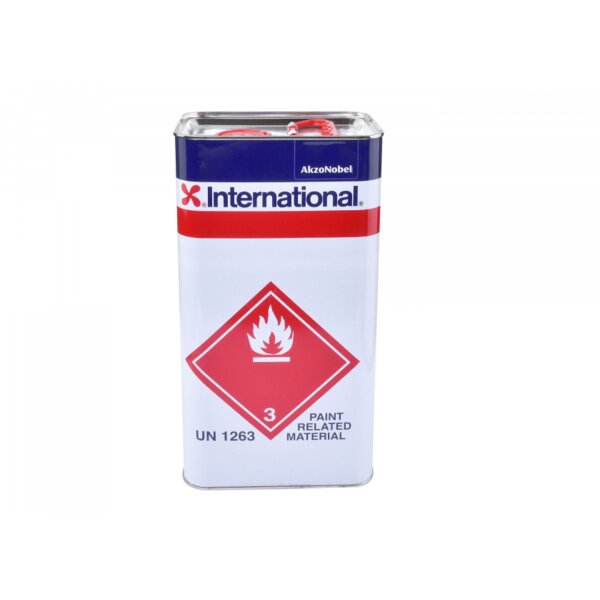
According to the safety and technical data sheets, the transport classification for Intergard 740 (including Part A as part of the mixed paint) is as follows:
- UN number / ID: UN1263
- UN proper shipping name: PAINT
- Transport hazard class: Class 3 (flammable liquid)
- Packing group: III
- Environmental hazards: Not classified as hazardous to the environment for transport purposes.
- ADR/RID tunnel restriction code: (D/E)
- IMDG emergency schedules: F-E, S-E
- Special precautions for user: Transport within user’s premises only in closed, upright and secure containers. Ensure personnel involved in transport know how to respond in case of accident or spillage.
- Bulk transport according to IMO instruments: Not applicable.
Section 8 – Personal protective measures
The safety data sheets for Intergard 740 White Part A specify the following personal protection and exposure control measures for professional users:
Engineering controls and hygiene
- Use only with adequate ventilation, employing local exhaust or process enclosures to keep airborne concentrations below occupational exposure limits and below the lower explosive limit.
- Use explosion-proof ventilation and electrical equipment.
- Wash hands, forearms and face thoroughly after handling and before eating, drinking or smoking.
- Contaminated work clothing should not leave the workplace and must be washed before reuse.
- Ensure eyewash stations and safety showers are located close to the work area.
Eye and face protection
- Wear chemical splash goggles or equivalent eye protection complying with an approved standard whenever there is a risk of eye contact with liquid, mists or vapours.
Hand protection
- Use chemical-resistant, impervious gloves complying with relevant standards.
- For prolonged or frequently repeated contact, a glove with protection class 6 (breakthrough time > 480 min according to EN374) is recommended; examples: Viton or nitrile gloves with thickness ≥ 0.38 mm.
- For brief contact, gloves with protection class ≥ 2 (breakthrough time > 30 min according to EN374) may be used; example: nitrile gloves with thickness ≥ 0.12 mm.
- Replace gloves regularly and immediately if damaged. Performance can be reduced by chemical or physical damage and poor maintenance.
Body and skin protection
- Select protective clothing based on the tasks and risks, approved by a specialist before use.
- Where there is a risk of ignition due to static electricity, wear anti-static protective clothing including overalls, boots and gloves meeting EN 1149 requirements.
- Use appropriate footwear and any additional skin protection as required by the work and risk assessment.
Respiratory protection
- Select respirators according to the hazard and potential exposure, within a formal respiratory protection program to ensure correct fitting and training.
- When needed, wear a respirator conforming to EN140 with an A/P2 type filter or better.
- Dry sanding, flame cutting or welding of the dry paint film can generate hazardous dust and fumes; use wet methods where possible or suitable respiratory protection and local exhaust ventilation.
*Contenido generado por IA