What is INTERSPEED 6400 and why choose it?
INTERSPEED 6400 from International Marina is a TBT-free, controlled depletion polymer (CDP) self-polishing antifouling coating designed for professional use on ship hulls. It is suitable for both newbuilding projects and Maintenance & Repair, including direct application over existing antifouling systems in repair situations. Formulated for deep sea and coastal service, it provides antifouling protection while complying with the International Convention on the Control of Harmful Anti-fouling Systems on Ships, 2001 (AFS 2001).
Main features
- TBT-free CDP technology: Organotin-free conventional antifouling system compliant with the AFS 2001 Convention.
- Self-polishing performance: Controlled depletion polymer matrix designed to maintain antifouling activity in service.
- Versatile application: For newbuilds, major refurbishment and repair; can be applied directly over existing antifoulings in repair situations after appropriate surface preparation.
- Professional application methods: Airless spray (recommended for large areas), with brush and roller recommended for small areas.
- Marine service range: Suitable for both deep sea and coastal use.
- Regulatory compliance: Product recognised as compliant with AFS 2001 by several classification societies, including Bureau Veritas, DNV, Korean Register of Shipping and Lloyd’s Register (when used as part of an approved scheme).
- Single-pack system: No curing agent or induction time required; thoroughly mix with a power agitator before application.
- Available colours: Red (BQA644), Brown (BQA648), Blue (BQA642), Green (BQA643), Black (BQA649).
Technical characteristics
Product data
- Type: TBT-free, controlled depletion polymer (CDP) self-polishing antifouling.
- Finish/Sheen: Not applicable.
- Colour range: Red BQA644, Brown BQA648, Blue BQA642, Green BQA643, Black BQA649.
- Volume solids: 60% ± 2% (ISO 3233:1998).
- Typical dry film thickness (DFT): 75–150 μm per coat.
- Typical wet film thickness: 125–250 μm.
- Theoretical coverage: Approximately 8.0–4.0 m²/litre at 75–150 μm DFT (allow for application losses).
- Flash point: 27°C (closed cup, single pack).
- Density: Approx. 1.812 g/cm³ (green, SDS data).
- Induction period: Not required.
- Mix ratio / Part B: Not applicable (single-pack product).
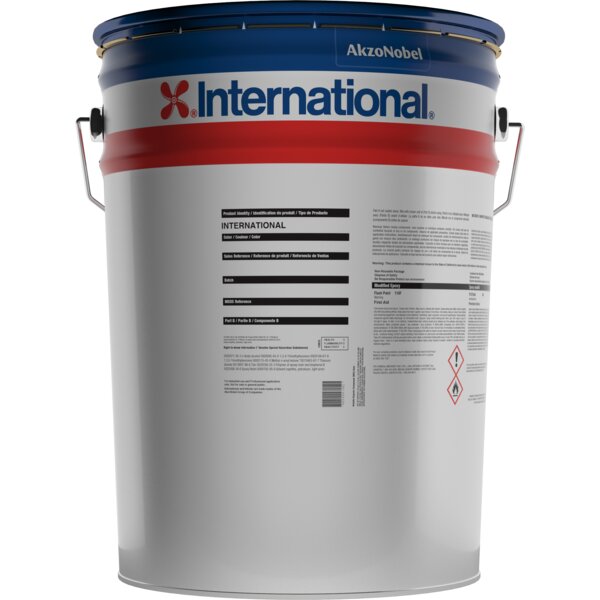
- Unit size: 20 litre pack (typical unit shipping weight approx. 39.7 kg).
- Shelf life: 12 months at 25°C, subject to re-inspection thereafter. Store in dry, shaded conditions away from heat and ignition sources.
Application methods
- Recommended methods: Airless spray, brush, roller.
- Airless spray:
- Tip size range: 0.66–0.79 mm (26–31 thou).
- Minimum fluid pressure at tip: 176 kg/cm² (2500 psi).
- Conventional spray: Not recommended.
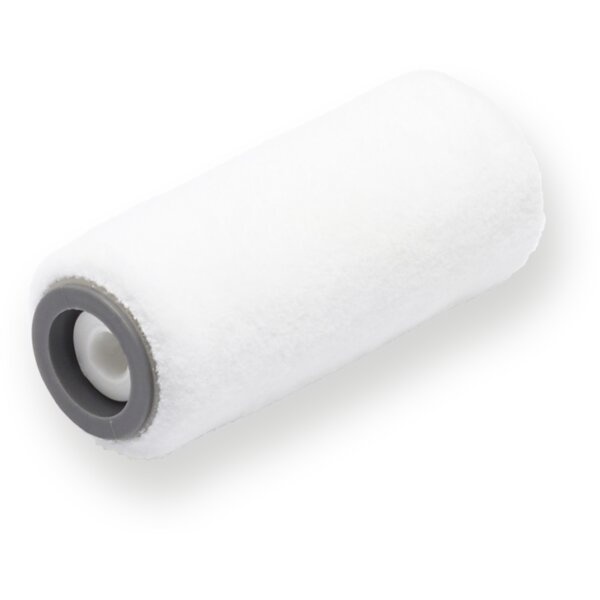
- Brush/Roller: Recommended for small areas only; multiple coats may be required to achieve the specified film thickness.
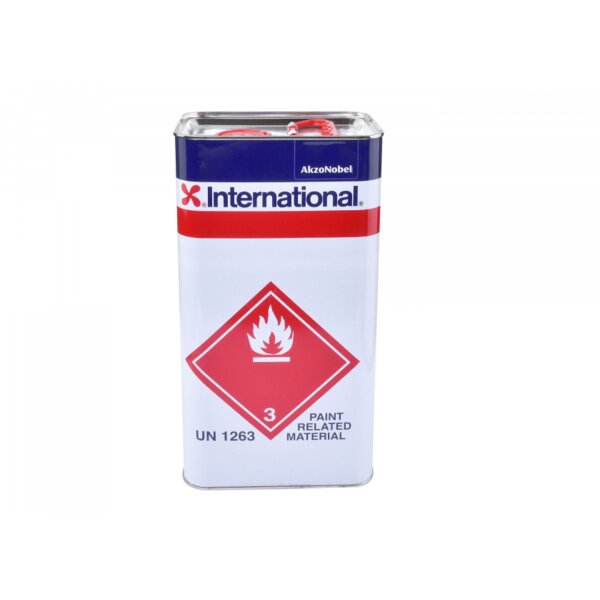
- Thinner/Cleaner: International GTA007 (thinning normally not required; do not exceed limits set by local environmental legislation).
- Mixing: Mix thoroughly with a power agitator before application.
Drying and overcoating
Typical drying times by substrate temperature:
- -5°C:
- Touch dry (ISO 9117/3:2010): 6 hours.
- Minimum time before flooding: 32 hours.
- Overcoating interval with Interspeed 6400: min 20 hours, max 6 months.
- 5°C:
- Touch dry: 4 hours.
- Before flooding: 12 hours.
- Overcoating interval: min 12 hours, max 6 months.
- 25°C:
- Touch dry: 2 hours.
- Before flooding: 8 hours.
- Overcoating interval: min 6 hours, max 6 months.
- 35°C:
- Touch dry: 60 minutes.
- Before flooding: 7 hours.
- Overcoating interval: min 4 hours, max 3 months.
Special note for major refurbishment/repair: If the total dry film thickness exceeds 300 μm or a single coat exceeds 150 μm DFT, increase minimum time before flooding to 24 hours at 10°C or below, and 18 hours at 25°C or above.
Regulatory and VOC data
- VOC (EPA Method 24): 363 g/l as supplied.
- VOC (EU Solvent Emissions Directive 1999/13/EC): 210 g/kg of liquid paint as supplied.
- VOC (Chinese Standard GB23985): 350 g/l.
- AFS 2001 compliance: Does not contain organotin compounds acting as biocides and is compliant with the International Convention on the Control of Harmful Anti-fouling Systems on Ships, 2001.
Applications and use cases
Intended uses
- Antifouling protection for ship hulls in deep sea and coastal service.
- Application on newbuilding projects as part of an approved coating scheme.
- Maintenance & Repair: for major refurbishment drydockings and routine repair work.
- Repair over existing antifouling: Interspeed 6400 can be applied directly over existing antifouling systems after proper washing and surface preparation.
Surface preparation overview
- General:
- All surfaces must be clean, dry and free from oil, grease, soluble contaminants and other foreign matter.
- Use high pressure fresh water washing or fresh water wash as appropriate.
- Remove oil and grease in accordance with SSPC-SP1 solvent cleaning.
- Newbuilding: Dependent on yard procedures; high pressure fresh water washing at pre-delivery drydocking as advised by the manufacturer’s representative.
- Major refurbishment:
- Apply over a recommended primer system.
- Primer surface must be dry and contamination-free.
- Apply within the specified overcoating interval for the primer.
- Breakdown or damaged areas should be prepared to at least Sa2½ (ISO 8501‑1:2007) and re-primed before applying INTERSPEED 6400.
- Repair over CDP antifoulings:
- Existing CDP antifoulings may contain a thick leached layer that must be removed.
- Treat the entire area by close high pressure fresh water washing (3,000 psi / 211 kg/cm²) using a fan-jet lance held close to the surface as soon as the vessel enters dock and before drying out.
- Repair corroded areas with the recommended primer scheme and apply INTERSPEED 6400 within the overcoating interval of the primer.
- Ensure the total area is clean and dry before overcoating.
- North America (surface prep note): SSPC-SP10 can be used in place of Sa2½ (ISO 8501‑1:2007) where applicable.
Application and environmental conditions
- Apply in good weather conditions.
- Substrate temperature must be at least 3°C above the dew point.
- For optimum application properties, bring material to 21–27°C prior to mixing and application (unless otherwise specified).
- Unmixed material should be stored in closed containers under protected conditions as detailed in the storage section.
Performance and exposure limits
- Maximum exposure time before flooding:
- Temperate conditions: up to 6 months.
- Tropical conditions: up to 3 months.
- If these limits are exceeded, antifouling performance may be impaired.
- On immersion, INTERSPEED 6400 changes colour. Early exposure to rain or running water can lighten the colour without affecting antifouling performance.
FAQ
1. Is INTERSPEED 6400 compliant with international antifouling regulations?
Yes. It does not contain organotin compounds acting as biocides and is compliant with the International Convention on the Control of Harmful Anti-fouling Systems on Ships, 2001 (AFS 2001). It is recognised as compliant by classification societies including Bureau Veritas, DNV, Korean Register of Shipping and Lloyd’s Register when used as part of an approved scheme.
2. Can INTERSPEED 6400 be applied over existing antifoulings?
Yes. In repair situations it can be applied directly over existing antifoulings, provided the surface is correctly washed, any leached layers are removed (for CDP antifoulings) and breakdown areas are re-primed as specified.
3. What application methods are recommended?
Airless spray is recommended for general application. Brush and roller may be used for small areas, with multiple coats if needed to reach the specified film thickness. Conventional spray is not recommended.
4. What is the typical coverage of INTERSPEED 6400?
The theoretical coverage is approximately 8.0–4.0 m² per litre at 75–150 μm dry film thickness, depending on the specified thickness and allowing for normal application losses.
5. How long can the coated hull remain exposed before flooding?
Under temperate conditions, exposure before flooding should not exceed 6 months; under tropical conditions, 3 months. Exceeding these limits may impair antifouling performance.
6. Does the product require a curing agent or induction time?
No. INTERSPEED 6400 is a single-pack coating with no Part B or mix ratio and no induction period required. It must, however, be mixed thoroughly with a power agitator before use.
7. What are the recommended minimum times before flooding after application?
Minimum times before flooding range from 32 hours at -5°C to 7 hours at 35°C for standard film builds. For higher film builds (total DFT >300 μm or single coat >150 μm), the minimum time before flooding must be increased to 24 hours at ≤10°C and 18 hours at ≥25°C.
8. How should application equipment be cleaned?
All application equipment should be thoroughly flushed with International GTA007 thinner/equipment cleaner. Unused material should be stored in tightly closed containers.
9. Does the colour change after immersion?
Yes. INTERSPEED 6400 changes colour on immersion. Early exposure to rain or running water may also lighten the colour, but this does not affect antifouling performance.
10. What is the recommended storage condition?
Store in original, tightly closed containers in a dry, shaded, well-ventilated area away from sources of heat and ignition, following the stated temperature and shelf-life limits.
Section 14 – Transport information
INTERSPEED 6400 is classified as hazardous for transport. The following information is based on the safety data sheet for Interspeed 6400 Green and applies to typical packed product:
- UN number / ID: UN1263.
- Proper shipping name: PAINT.
- Transport hazard class: Class 3 (flammable liquid).
- Packing group: III.
- ADR/RID:
- UN1263, PAINT, Class 3, Packing Group III.
- Environmental hazards: Yes (environmentally hazardous substance mark not required for ≤5 L or ≤5 kg).
- Tunnel code: D/E.
- IMDG:
- UN1263, PAINT, Class 3, Packing Group III.
- Marine pollutants: dicopper oxide, zinc oxide.
- Marine pollutant mark not required for ≤5 L or ≤5 kg.
- Emergency schedules: F‑E, S‑E.
- IATA:
- UN1263, PAINT, Class 3, Packing Group III.
- Environmentally hazardous substance mark may appear if required by other transport regulations.
- Special precautions for users: Within the user’s premises, always transport in closed, upright and secure containers. Ensure personnel involved in transport know the actions to take in case of accident or spillage.
Section 8 – Individual protection measures
The following personal protective equipment (PPE) and control measures are recommended during handling and application, based on the safety data sheet for Interspeed 6400 Green:
Engineering controls and hygiene
- Use only with adequate ventilation. Apply local exhaust ventilation or process enclosure to keep exposures below occupational limits and below lower explosive limits.
- Use explosion-proof ventilation and handling equipment.
- Wash hands, forearms and face thoroughly after handling and before eating, drinking, smoking or using the lavatory.
- Remove contaminated clothing and protective equipment before entering eating areas; wash contaminated clothing before reuse.
- Ensure eyewash stations and safety showers are available near the work area.
Hand protection
- Wear chemical-resistant, impervious gloves complying with EN 374 or equivalent.
- For prolonged or frequently repeated contact, use gloves with protection class 6 (breakthrough time >480 minutes); recommended materials: Viton or nitrile, thickness ≥0.38 mm.
- For brief contact, gloves with protection class ≥2 (breakthrough time >30 minutes); recommended: nitrile gloves, thickness ≥0.12 mm.
- Replace gloves regularly and immediately if damaged. Glove performance may be reduced by physical or chemical damage and poor maintenance.
Eye and face protection
- Use safety eyewear meeting an approved standard whenever risk of splashes, mists or vapours exists.
- As a minimum, wear chemical splash goggles; if a higher level of protection is required, use a face shield or a full-face respirator.
Skin and body protection
- Select protective clothing based on the specific task and risk assessment.
- When ignition from static electricity is possible, wear anti-static protective clothing including anti-static overalls, boots and gloves (refer to EN 1149 for requirements).
- Use appropriate footwear and any additional skin protection measures as required by the work activity.
Respiratory protection
- Select respiratory protection according to exposure level and applicable standards, within a formal respiratory protection programme.
- Wear a respirator conforming to EN 140 fitted with type A/P2 filter or better when ventilation is inadequate.
- Dry sanding, flame cutting or welding of the dry paint film produces dust and/or hazardous fumes; use wet sanding/flatting where possible. If exposure cannot be controlled by ventilation, appropriate respiratory protection must be used.
Environmental exposure controls
- Check emissions from ventilation and process equipment to ensure compliance with environmental legislation.
- Where necessary, use fume scrubbers, filters or engineering modifications to reduce emissions.
*Contenido generado por IA