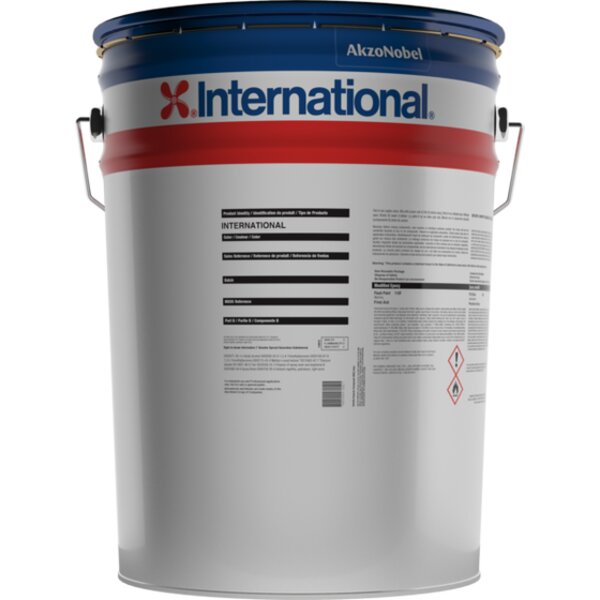
What is INTERSWIFT 6800HS and why choose it?
INTERSWIFT 6800HS by International Marina is a patented, solvent-borne, self-polishing antifouling coating based on Copper Acrylate SPC (Self Polishing Copolymer) technology. It is TBT-free and designed to deliver low-friction, self-polishing performance for deep sea and coastal vessels in both newbuilding and maintenance and repair projects. When applied over a suitable primer system, it provides effective fouling control while complying with the International Convention on the Control of Harmful Anti-fouling Systems on Ships, 2001.
This one-pack product is formulated for professional and industrial use and can be applied by airless spray, brush or roller. Its high volume solids and wide dry film thickness range allow flexible specification according to vessel type, operating profile and docking interval.
Main features
- TBT-free SPC antifouling: Uses Copper Acrylate self-polishing copolymer technology and contains no organotin biocides, in compliance with IMO AFS 2001.
- Low-friction self-polishing surface: The self-polishing mechanism helps maintain a smooth, clean hull surface, optimising hydrodynamic efficiency.
- Suitable for deep sea and coastal traffic: Designed for a wide range of trading patterns and operating profiles.
- High solids, high build: Approx. 62% ±2% volume solids (ISO 3233:1998) and a typical dry film thickness range of 75–200 μm for tailored protection.
- Flexible application: Single-pack product, applied primarily by airless spray, with brush and roller recommended for small areas and touch-up work.
- Regulatory compliance: VOC values determined according to EPA Method 24, EU Solvent Emissions Directive and Chinese GB23985; recognised as compliant with international antifouling regulations.
- Certified by major classification societies: Recognised as compliant with the International Convention on the Control of Harmful Antifouling Systems on Ships, 2001 (AFS 2001) by Lloyd’s Register, DNV, Bureau Veritas and Korean Register of Shipping (when used as part of an approved scheme).
- For newbuild and drydock: Can be specified both for new construction and for major refurbishment or maintenance and repair dockings.
Technical characteristics
Product type and use
- Type: TBT-free, low-friction, self-polishing copolymer antifouling (SPC) based on Copper Acrylate technology.
- Product form: Single-pack, solvent-borne liquid coating.
- Intended use: Antifouling coating for ship hulls and other immersed areas, at newbuilding or during maintenance and repair.
- Service environment: Deep sea and coastal waters.
- Use category (biocidal regulation): PT21 Antifouling products, liquid paint; for professional use only.
Colours
- Standard colours: BMA682 Blue, BMA683 Green, BMA684 Red, BMA688 Brown, BMA689 Black.
- European regulated countries: BMA632 Blue, BMA633 Green, BMA634 Red, BMA638 Brown, BMA639 Black.
- Colour change on immersion: Red changes to light red; Brown changes to dark brown/black.
Film build and coverage
- Volume solids: 62% ±2% (ISO 3233:1998).
- Typical dry film thickness (DFT): 75–200 μm.
- Corresponding wet film thickness (WFT): 121–323 μm.
- Theoretical coverage: 8.3–3.1 m²/litre at 75–200 μm DFT (loss factors must be taken into account).
Application and curing
- Application methods: Airless spray (recommended for full areas), brush and roller (small areas only; multiple coats may be required to achieve specified DFT).
- Airless spray setup:
- Tip size: 0.46–0.66 mm (18–26 thou).
- Minimum fluid pressure at tip: 176 kg/cm² (2500 psi).
- Conventional spray: Not recommended.
- Mixing: One-pack coating; always mix thoroughly with a power agitator before application.
- Thinner: International GTA007. Thinning is not normally required; any thinning must comply with local environmental legislation.
- Cleaner: International GTA007 (choice may be subject to local legislation).
- Flash point: 28°C (closed cup, single pack).
Drying and flooding times
Typical drying times (ISO 9117/3:2010) at given substrate temperatures:
- -5°C: Touch dry 6.5 hours; before flooding 30 hours.
- 5°C: Touch dry 4.5 hours; before flooding 12 hours.
- 25°C: Touch dry 2 hours; before flooding 8 hours.
- 35°C: Touch dry 1.5 hours; before flooding 7 hours.
Major refurbishment and repair: If total DFT is greater than 300 μm or any single coat exceeds 150 μm DFT, flooding times must be increased to 24 hours at 10°C or below, and 18 hours at 25°C or above.
Overcoating intervals (guidance)
Overcoated by Intersmooth 7460HS SPC:
- -5°C: minimum 26 hours, maximum extended.
- 5°C: minimum 18 hours, maximum extended.
- 25°C: minimum 12 hours, maximum extended.
- 35°C: minimum 9 hours, maximum extended.
Overcoated by Interswift 6800HS (self-overcoating):
- -5°C: minimum 20 hours, maximum extended.
- 5°C: minimum 12 hours, maximum extended.
- 25°C: minimum 6 hours, maximum extended.
- 35°C: minimum 4 hours, maximum extended.
In the overcoating data, “ext” denotes an extended overcoating period. Actual limits depend on local climate and environmental conditions.
Regulatory and VOC data
- VOC (EPA Method 24): 348 g/L as supplied.
- VOC (EU Solvent Emissions Directive 1999/13/EC): 184 g/kg of liquid paint as supplied.
- VOC (Chinese National Standard GB23985): 346 g/L.
- Organotin content: Does not contain organotin compounds acting as biocides; compliant with IMO AFS/CONF/26 (International Convention on the Control of Harmful Antifouling Systems on Ships, 2001).
Packaging, storage and logistics
- Standard unit size: 20 litre pack (20 L volume).
- Typical unit shipping weight: Approx. 40 kg for 20 L unit.
- Shelf life: 18 months at all temperatures, subject to reinspection thereafter.
- Storage conditions: Store in dry, shaded conditions, away from sources of heat and ignition. Keep containers tightly closed in a well-ventilated area.
Applications and use cases
Newbuilding and major refurbishment
- Apply INTERSWIFT 6800HS over a recommended primer coating scheme, in accordance with standard Worldwide Marine Specifications.
- The primed surface must be dry, clean and free from contamination and coated within the specified overcoating intervals of the primer.
- Areas of steel breakdown or damage should be prepared to Sa2½ (ISO 8501-1:2007) or SSPC-SP10 (for North American marine use) and re-primed before antifouling application.
- High pressure fresh water washing (pre-delivery drydockings) should be carried out in consultation with the local representative.
Maintenance and repair
Overcoating INTERSWIFT 6800HS over itself
- On drydocking, high-pressure fresh water wash the entire area (approx. 3000 psi / 211 kg/cm²) with a fan-jet held close to the surface as soon as the vessel enters dock and before drying.
- Repair corroded areas using the recommended anticorrosive primer system, then overcoat with INTERSWIFT 6800HS within the primer’s overcoating interval.
Overcoating other antifoulings
- Application over International Paint TBT-free systems, Intersmooth SPC products or competitive antifoulings must follow specific recommendations from International Paint.
- Where tar anticorrosives are exposed (polished through) at maintenance and repair, touch up with Intertuf 203 prior to applying INTERSWIFT 6800HS.
Operating profile
- Suitable for vessels operating in deep sea trades, coastal routes or mixed service, where reliable fouling control and a smooth hull finish are required.
- Intended for professional application in shipyards, drydocks and newbuilding facilities.
FAQ
1. What type of antifouling is INTERSWIFT 6800HS?
It is a TBT-free self-polishing copolymer (SPC) antifouling based on Copper Acrylate technology, delivering low-friction, self-polishing performance for immersed ship hulls.
2. Where can INTERSWIFT 6800HS be used?
It is designed for exterior underwater areas of vessels operating in deep sea or coastal waters, both at newbuilding and during maintenance and repair dockings, when used as part of an approved coating scheme.
3. How is INTERSWIFT 6800HS applied?
The primary method is airless spray, using a 0.46–0.66 mm (18–26 thou) tip and a minimum fluid pressure of 176 kg/cm² (2500 psi). Brush and roller application are recommended only for small areas or touch-up, and may require multiple coats to reach the specified film thickness.
4. Do I need to thin the product before application?
Thinning is not normally required. Where thinning is necessary due to extreme conditions, International GTA007 thinner should be used, and any thinning must remain within local environmental regulations.
5. What surface preparation is required before application?
All surfaces must be clean, dry and free from oil, grease, salts and other contaminants. Use solvent cleaning (SSPC-SP1) and high-pressure fresh water washing as appropriate. Steel breakdown areas should be prepared to Sa2½ (ISO 8501-1:2007) or SSPC-SP10 and re-primed before antifouling application.
6. Can INTERSWIFT 6800HS be applied over existing antifoulings?
Yes, it can be applied over existing INTERSWIFT 6800HS, International TBT-free systems, Intersmooth SPC antifoulings or competitor products, but the exact procedure and compatibility must be confirmed with International Paint recommendations.
7. What are the recommended film thickness and coverage?
The typical dry film thickness range is 75–200 μm, corresponding to 121–323 μm wet film thickness. Theoretical coverage is approximately 8.3–3.1 m²/litre within this DFT range, prior to allowing for loss factors.
8. Is INTERSWIFT 6800HS compliant with IMO antifouling regulations?
Yes. The product is TBT-free, contains no organotin biocides and is compliant with the International Convention on the Control of Harmful Anti-fouling Systems on Ships, 2001. It is also recognised as compliant by major classification societies when used within an approved scheme.
9. What happens to the colour after immersion?
Upon immersion, Red shades shift to a lighter red and Brown shades shift to a dark brown or black appearance. This is a normal characteristic of the system.
10. What is the shelf life and how should the product be stored?
The stated shelf life is 18 months at all temperatures, subject to reinspection thereafter. Store in dry, shaded conditions in tightly closed containers, away from heat and ignition sources.
Section 14 – Transport information
Transport classification and requirements for INTERSWIFT 6800HS (Interswift 6800HS Red safety data):
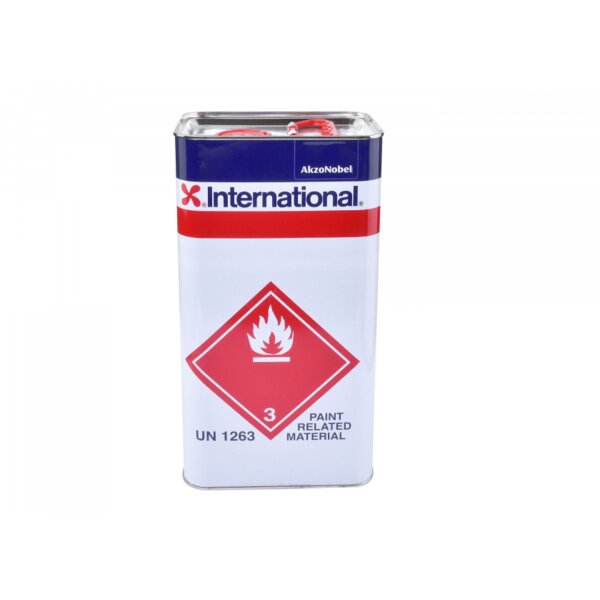
- UN number / ID number: UN1263.
- UN proper shipping name: PAINT.
- Transport hazard class: Class 3 (flammable liquid) for ADR/RID, IMDG and IATA.
- Packing group: III.
- Marine pollutants (IMDG): dicopper oxide, zinc oxide.
- Environmental hazards: Classified as environmentally hazardous for transport; however, the environmentally hazardous substance mark is not required when transported in packages of 5 L or 5 kg or less.
- ADR/RID tunnel code: D/E.
- IMDG emergency schedules: F-E, S-E.
- Special precautions for user: Within user premises, always transport in closed, upright and secure containers. Personnel transporting the product must know the actions to take in case of an accident or spillage.
- Transport in bulk according to IMO instruments: Not applicable.
Section 8 – Personal protective measures
The following information summarises the key exposure controls and personal protective equipment (PPE) recommended when handling INTERSWIFT 6800HS in professional and industrial settings, based on the safety data sheet.
Engineering controls and hygiene
- Use only with adequate ventilation. Apply process enclosures and local exhaust ventilation to keep exposure below applicable occupational exposure limits and below lower explosive limits.
- Use explosion-proof ventilation and electrical equipment in areas where the product is handled or applied.
- Ensure eyewash stations and safety showers are located near work areas.
- Implement good hygiene practices: wash hands, forearms and face thoroughly after handling, before eating, drinking or smoking and at the end of the shift.
- Remove contaminated clothing and protective equipment before entering eating areas; wash contaminated clothing before reuse.
Eye and face protection
- Wear chemical splash goggles and/or a face shield complying with an approved standard whenever there is risk of splashes, mists or aerosols.
- Where inhalation hazards exist and a full-face respirator is used, it can provide combined respiratory and eye protection, as indicated by the risk assessment.
Hand protection
- Use chemical-resistant, impervious gloves complying with EN374 or equivalent when handling the product.
- For prolonged or frequent contact, gloves with protection class 6 (breakthrough time > 480 minutes) are recommended; materials: Viton or nitrile, thickness ≥ 0.38 mm.
- For brief contact, gloves with protection class ≥ 2 (breakthrough time > 30 minutes) are recommended; material: nitrile, thickness ≥ 0.12 mm.
- Replace gloves regularly and immediately if damaged. The effective protection time can vary between manufacturers and may be reduced by physical or chemical damage or poor maintenance.
Skin and body protection
- Select protective clothing (coveralls, aprons, etc.) based on the specific task and risk, with specialist approval.
- Where there is a risk of ignition from static electricity, use anti-static protective clothing. For maximum protection, this should include anti-static overalls, boots and gloves in accordance with EN 1149 (materials, design and test methods).
- Wear appropriate footwear and any additional skin protection as required by the risk assessment.
Respiratory protection
- Select respiratory protection according to the hazard, exposure level and applicable standards.
- Use a respirator conforming to EN140 fitted with an A/P2 filter or better when ventilation alone is insufficient to control exposure.
- Implement a respiratory protection programme to ensure correct selection, fitting, training and maintenance.
- When dry sanding, flame cutting or welding the dry paint film, hazardous dusts and fumes may be generated; wet sanding/flatting should be used wherever possible. If exposure cannot be avoided by local exhaust ventilation, suitable respiratory protection is mandatory.
Environmental exposure controls
- Check emissions from ventilation and process equipment to ensure compliance with environmental legislation.
- Use fume scrubbers, filters or process modifications where necessary to minimise emissions and prevent contamination of drains, watercourses or soil.
Contenido generado por IA