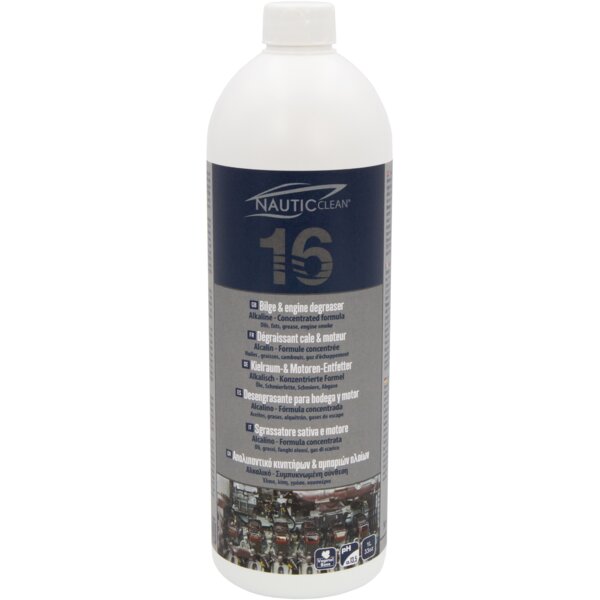
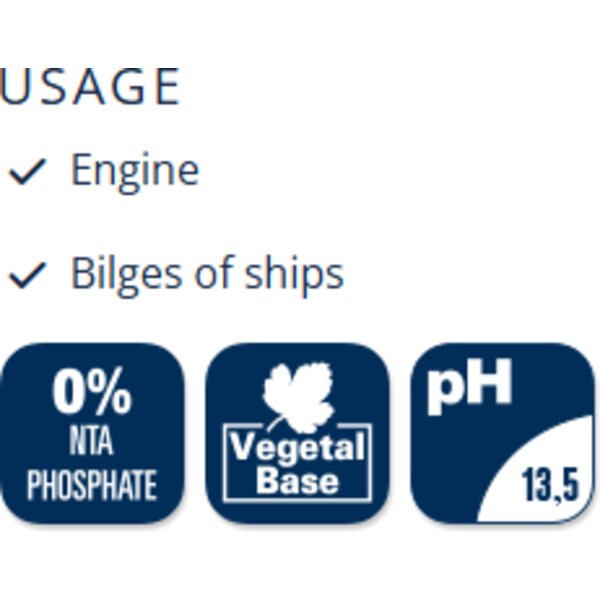
Alkaline bilge and engine degreaser specially formulated for thorough cleaning of ship engines and bilges, removing grease, hydrocarbons, carbon deposits, waste oils and smoke. It does not alter light alloys, paints or plastics and is based on vegetable-origin surfactants that meet EU biodegradability criteria (Regulation (EC) no 648/2004).
*Contenido generado por IA
NAUTICCLEAN 16 Bilge & Engine Degreaser is an alkaline cleaner specially developed for the thorough cleaning of bilges and engines on boats. Its formula quickly removes typical marine contamination such as grease, hydrocarbons, carbon deposits, waste oils and exhaust smokes, without attacking light alloys, paints or plastics. Based on surfactants of vegetable origin and complying with European biodegradability criteria, it offers effective cleaning while respecting both the substrate and the environment.
It removes grease, hydrocarbons, carbon deposits, waste oils, combustion smokes and similar contaminants typically present in bilges and engine compartments.
The product is designed for engines and bilges of ships and does not alter light alloys, paints or plastics when used according to the instructions.
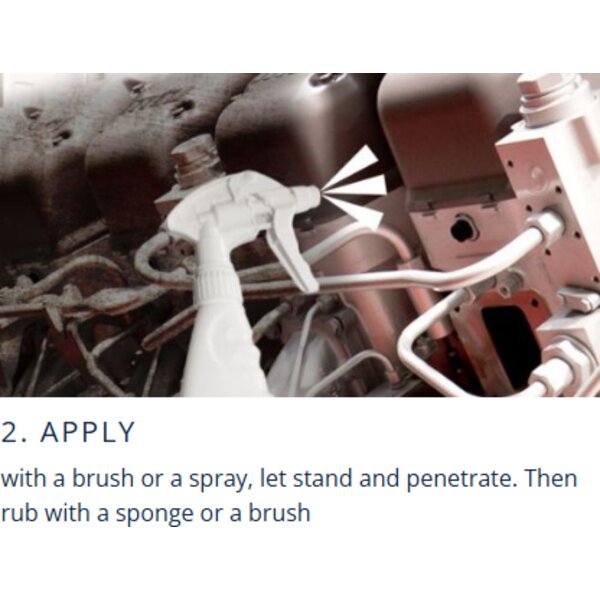
Spray the degreaser onto the soiled surface, let it act for a while, scrub with a brush or sponge and then rinse with fresh water.
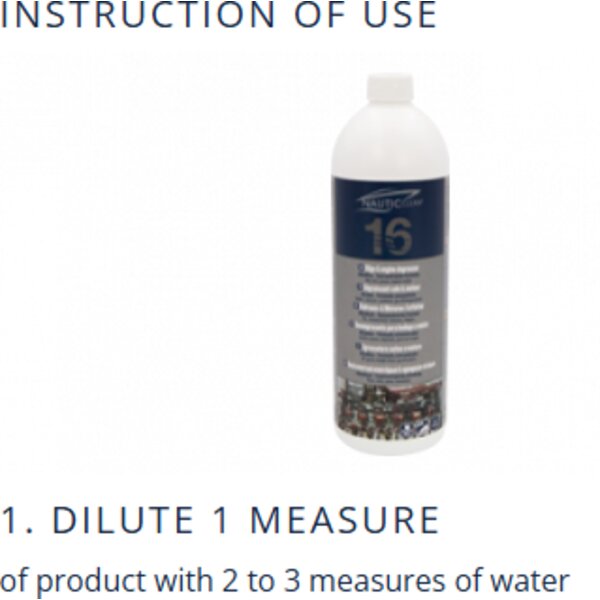
The instructions provided specify spraying the product, allowing it to act, scrubbing and rinsing; no dilution ratios are indicated.
No. Residues must not be discharged to the sewer or watercourses. Follow local regulations for disposal.
The surfactants contained in the formulation comply with the biodegradability criteria of Regulation (EC) No 648/2004 on detergents.
Handle the product with care, follow the usual safety measures for chemical products and use the appropriate personal protective equipment indicated in the safety data sheet.
Store the tightly closed container in a ventilated place, protected from frost, cold, heat and direct sunlight.
It is a light orange liquid with an aromatic odour.
No. According to the data provided, the product is not explosive and is not self-ignitable.
*Contenido generado por IA
| Ref. | Presentation | Capacity | Amount* |
|---|---|---|---|
| NC1601 | botella | 1 l | 19,35 € |
| NC 605 | garrafa | 5 l | 60,70 € |
| NC16220 | bidon | 220 l | 1.337,84 € |
| NC1625 | botella | 25 l | 217,04 € |
| NC16750 | vaporizador | 750 ml | 19,48 € |

Color: Gray
1 X $113.88