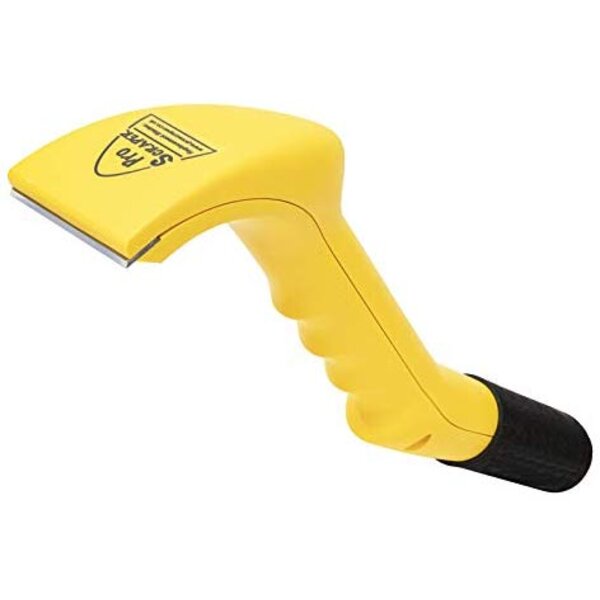
VACUUM SCAPPER

Regular price 35,00€

*VAT not included

GelPlane VACUUM SCAPPER is a manual, ergonomic metal scraper designed for stripping paint from most surfaces. Its main use is surface preparation by efficient paint removal, but specific technical details are not verified and should be confirmed in the official technical datasheet.

*Contenido generado por IA

    Presentation: Package
    Capacity: 1 uds
    Colour:

Features

    Presentation: Package
    Capacity: 1 uds
    Colour:

description

What is the GelPlane VACUUM SCAPPER and why choose it?

The GelPlane VACUUM SCAPPER (also called Gelplane Vacuum Scraper or Pro Scraper) is a professional paint and gelcoat scraper designed for boat hull maintenance and surface preparation. It connects directly to a vacuum cleaner, so removed paint and dust are extracted at the source, resulting in cleaner, safer and more efficient scraping, especially when stripping antifouling or gelcoat layers on GRP hulls. This description is based on publicly available information about GelPlane vacuum scrapers and may not cover all model variants.

Choosing the GelPlane VACUUM SCAPPER means opting for controlled material removal with integrated dust extraction, reducing cleanup time and limiting exposure to sanding dust and paint particles.

Main features

  • Integrated vacuum connection for direct attachment to a compatible vacuum cleaner, helping to capture dust and paint chips during scraping (feature inferred from Gelplane Pro Scraper and Vacuum Scraper product descriptions; exact coupling dimensions may vary and are not verified).
  • Professional-grade scraper head engineered for hull and paint stripping applications, especially on boat hulls and similar coated surfaces.
  • Carbide replacement blades available (information based on listings for carbide blades for Gelplane Vacuum/Pro Scraper; specific blade sizes and quantities are not verified).
  • Designed for gelcoat and paint removal on GRP and painted substrates, helping to strip antifouling coatings and degraded gelcoat layers where compatible with the substrate and coating system.
  • Manual, controlled scraping instead of aggressive mechanical sanding, helping reduce the risk of damaging the underlying laminate when used correctly.
  • Ergonomic handheld format for localized scraping, edges and detailed work (handle design and dimensions may differ between versions and are not fully verified).

For exact construction details (materials, blade geometry, handle design) and model-specific features, please refer to the official GelPlane technical datasheet, as these details are not fully verified here.

Technical specifications

The following points summarize what can be reasonably inferred from public product information about GelPlane vacuum scrapers. Individual specifications for the VACUUM SCAPPER model may differ and are not fully verified:

  • Tool type: Handheld vacuum-compatible paint and gelcoat scraper.
  • Vacuum interface: Designed to be connected to a vacuum hose for dust extraction during use (hose diameter, connector type and compatible vacuum capacity not verified).
  • Blade type: Replaceable hard-metal / carbide blades available for Gelplane vacuum scrapers; exact alloy, dimensions and cutting angles for this model are not verified.
  • Typical application surfaces: GRP/FRP boat hulls and other painted or coated rigid surfaces, where scraping is permitted by the coating system and substrate.

For confirmed, numerical specifications such as dimensions, weight, compatible hose diameters and recommended vacuums, consult the official GelPlane product documentation.

Applications and use cases

Typical applications

  • Boat hull antifouling removal where local regulations and substrate condition allow mechanical scraping.
  • Gelcoat stripping in osmosis treatment workflows, as part of the preparatory steps specified by a repair system (only where a scraper is recommended by the system supplier).
  • Localized paint removal on marine or industrial structures where dust control is important.
  • Detail work in corners, near keels and appendages, or around fittings where other tools cannot reach easily.

Best practices for use (non-exhaustive and not manufacturer-verified)

  • Always verify with the coating manufacturer and yard rules that mechanical scraping is allowed on the specific coating and substrate.
  • Adjust scraping pressure to avoid gouging the surface; begin with light passes and inspect frequently.
  • Ensure the vacuum system and filters are suitable for collecting fine dust and paint residues according to local regulations.
  • Dispose of removed paint and dust as hazardous or special waste if required by local environmental rules.

These usage notes are general recommendations based on typical practice and are not a substitute for the official GelPlane instructions or local safety and environmental regulations.

FAQ – GelPlane VACUUM SCAPPER

1. What type of tool is the GelPlane VACUUM SCAPPER?

It is a handheld vacuum-compatible scraper designed to remove paint and gelcoat while simultaneously extracting dust and debris. The exact configuration for this model is not fully verified; refer to the official GelPlane datasheet for definitive details.

2. Can it be used on any boat hull?

In general, GelPlane vacuum scrapers are used on GRP/FRP hulls and painted surfaces. However, suitability depends on the coating system, hull condition and yard or regulatory restrictions. Always confirm with the coating manufacturer and follow local rules.

3. Does it include a vacuum cleaner?

No, the product is a scraper with a connection for a vacuum cleaner. The vacuum unit itself is typically not included. Check the specific product listing or official documentation to confirm what is supplied.

4. Which vacuum cleaners are compatible?

Public information indicates that GelPlane vacuum scrapers connect to a vacuum hose, but exact hose diameter and compatibility with specific models are not verified here. Check the official GelPlane instructions or consult the supplier for precise compatibility information.

5. Are replacement blades available?

Yes, various retailers offer carbide replacement blades for Gelplane vacuum and Pro scrapers. The exact blade type required for the VACUUM SCAPPER should be confirmed against the manufacturer’s part numbers to ensure compatibility.

6. Is this tool suitable for complete gelcoat removal for osmosis treatment?

GelPlane tools are often used in osmosis treatment workflows, but whether this specific model is appropriate for full gelcoat removal depends on the repair system and instructions you follow. Always adhere to the system supplier’s and GelPlane’s official recommendations.

7. Does the tool reduce airborne dust compared to traditional scraping?

Because it connects to a vacuum cleaner, it is intended to capture a large part of the dust and particles at the source, which can significantly reduce airborne dust compared to scraping without extraction. Actual performance depends on the vacuum system and how the tool is used.

8. What materials is the scraper made from?

Public sources indicate the use of hard-metal or carbide blades with a robust scraper body, but the exact materials, alloys and handle construction for the VACUUM SCAPPER model are not verified. For precise material data, use the official GelPlane technical documentation.

9. Can I use it indoors in a workshop?

Yes, it is often used in workshops and boat sheds because the vacuum connection helps control dust. Ensure adequate ventilation, a suitable extraction system and compliance with all local safety and environmental requirements.

10. Where can I find complete, verified technical data?

For fully verified specifications, safety instructions and approved applications, always consult the official GelPlane technical datasheet and user manual corresponding to the exact VACUUM SCAPPER model you are purchasing.

Section 14 – Transport information

This section summarizes general considerations related to the transport of the GelPlane VACUUM SCAPPER as a hand tool. It is not a substitute for any official safety data sheet or transport document and is not manufacturer-verified.

  • UN classification: The tool itself is typically a non-hazardous article and is not assigned a UN number. Any associated consumables (such as chemicals or coatings used in the same project) may have their own classifications, which must be checked separately.
  • Transport regulations: Under normal conditions, the scraper can usually be transported as standard cargo by road, sea or air without special dangerous-goods provisions. Always verify this against official documentation if you are shipping in commercial quantities or together with hazardous materials.
  • Packaging: Use sturdy packaging to protect the scraper and, in particular, the blade. Cover or shield the cutting edge to prevent accidental damage or injury during handling.
  • Blade safety in transit: Ensure blades are retracted, covered or removed and stored safely according to local transport and workplace safety rules.
  • Environmental conditions: Store and transport in dry conditions, protected from moisture and contamination, to avoid corrosion of metal parts and deterioration of packaging.

For formal transport classification in professional logistics contexts, rely on the official manufacturer information and any applicable safety data sheets.

Section 8 – Personal protective measures

The following personal protection guidelines are based on general industry practice for manual scraping tools with dust extraction and are not specific, manufacturer-verified instructions. Always follow the official GelPlane safety recommendations and local regulations.

  • Eye and face protection: Wear safety glasses or a face shield to protect against flying particles, especially when working overhead or on vertical surfaces.
  • Hand protection: Use suitable work gloves that provide cut resistance while allowing a secure grip on the tool.
  • Respiratory protection: Even with vacuum extraction, fine dust and paint particles can remain in the air. Use an appropriate respirator or dust mask rated for the type of dust and any hazardous components in the coatings being removed.
  • Hearing protection: Depending on the noise level generated by the connected vacuum cleaner and the work environment, hearing protection may be required.
  • Protective clothing: Wear durable work clothing that covers arms and legs. In confined spaces or when removing coatings that may contain hazardous substances, consider disposable coveralls.
  • Foot protection: Use safety footwear with slip-resistant soles to maintain stable footing around boats, scaffolding and wet surfaces.
  • Work practices: Maintain a stable stance, keep hands away from the cutting edge, and disconnect the vacuum and store the scraper safely when not in use. Follow yard and workplace safety procedures at all times.

These measures are indicative and must be adapted to the specific worksite, coating system and regulatory framework.

*Contenido generado por IA
SAFETY DATA SHEETS

SAFETY DATA SHEETS

link

Instructions

Instructions

link

Recently Viewed

Ref. Amount*
GLPSCRAP 35,00 €
Page up

Product Quick View Popup

Vendor: Optimal

Product Type: Tops

SKU: 50-ABC

In stock Pre-order Now Sold out Order now, Only 10 left!
$400.00$300.00
Optimal Multipurpose Bootstrap 5 Html Template that will give you and your customers a smooth shopping experience which can be used for various kinds of stores such as fashion..
  • Black
  • Green
  • Orange
  • Blue
  • Red
  • XS
  • S
  • M
  • L
  • XL

Added to your shopping cart successfully.

Added to your shopping cart successfully.
Ditsy Floral Dress

Color: Gray

1 X $113.88

Total: $113.88