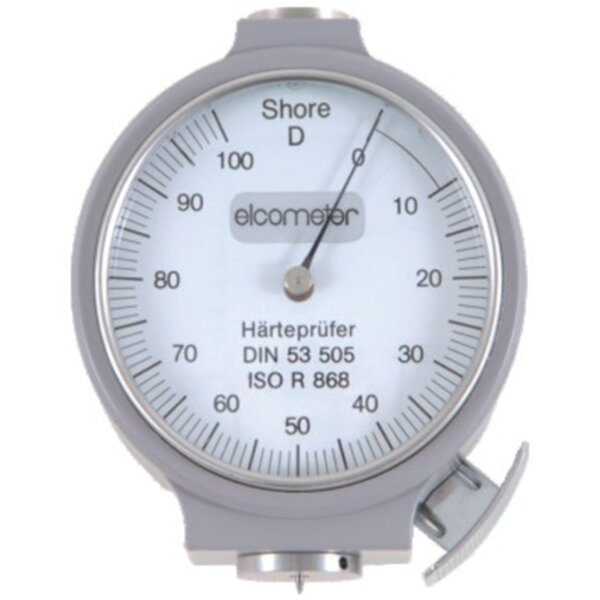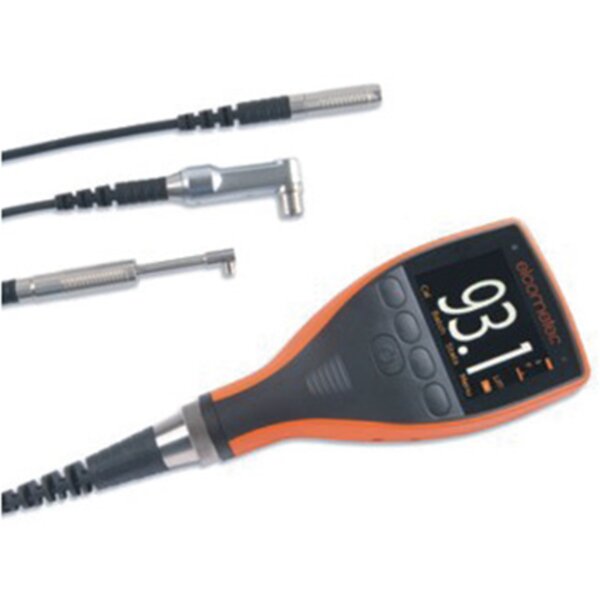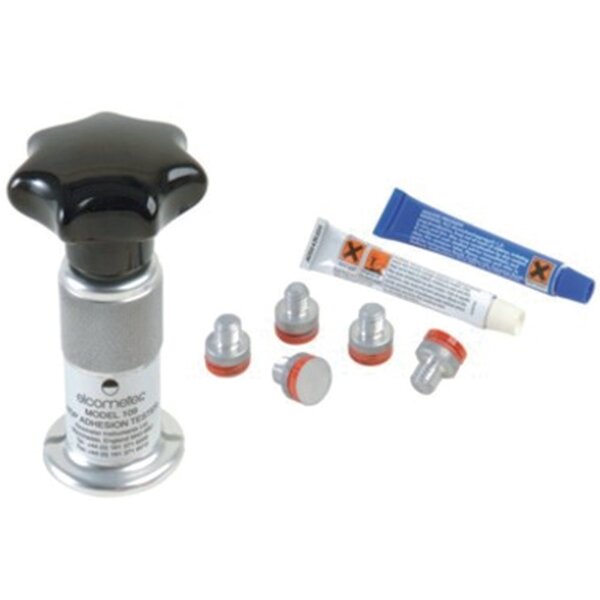
The Elcometer Tensile Adhesion Tester is a portable instrument used to measure the tensile pull-off adhesion strength of coatings on various substrates. It evaluates how strongly a coating is bonded to the surface by applying a controlled tensile force until failure. Some specific capabilities, ranges or compatible standards may vary by exact Elcometer model and are not fully verified here; please check the official technical datasheet for confirmed specifications.
*Contenido generado por IA
| Presentation: | Unit |
| Presentation: | Unit |
The Elcometer Tensile Adhesion Tester is a professional pull-off / push-off adhesion gauge designed to measure the tensile bond strength of coatings to a substrate or between coating layers. Using glued dollies (or stubs) and a controlled mechanical or hydraulic pull, it provides a numerical value of adhesion in MPa or psi, helping you verify coating performance, detect weak bonding and prevent premature coating failures in the field or in the laboratory. The most common Elcometer tensile adhesion models include the Elcometer 506 Hydraulic Pull-Off Adhesion Tester and the Elcometer 508 Push Off Adhesion Tester, widely used in protective coatings and industrial finishing applications.
Information in this description is based on publicly available data for Elcometer adhesion testers and may not match your exact model or configuration. For critical selection or safety decisions, the official Elcometer technical datasheet should be consulted.
The following values are indicative and compiled from common Elcometer tensile adhesion testers such as the Elcometer 506 and 508. They may not correspond exactly to your specific model or configuration and should be verified against the official datasheet.
It measures the tensile force required to detach a coating from its substrate (or between layers). This force is converted into a pressure value (MPa or psi) based on the dolly area, providing a quantitative measure of adhesion strength.
A metal dolly is glued to the coating surface using a suitable adhesive. After full curing, the tester is attached to the dolly. Load is then applied smoothly until the coating detaches or the maximum test value is reached, and the instrument displays the adhesion value.
Certain models, such as the Elcometer 508 Push Off Adhesion Tester, are specifically designed for both flat and curved (concave and convex) surfaces, making them suitable for pipes and tanks. Always verify surface capability for your exact model in the official datasheet.
Yes, Elcometer typically supplies reusable stainless steel dollies. After each test, adhesive and coating residues must be removed using the recommended cleaning method and tools before re-use.
Many Elcometer pull-off and push-off adhesion testers are designed to work in accordance with common international standards for pull-off adhesion testing, such as ASTM D4541 or similar. The exact list of applicable standards depends on the specific model and should be confirmed in the official documentation.
Two-part epoxies or fast-curing cyanoacrylate adhesives are commonly supplied and recommended, as they provide high bond strength and consistent curing. Only adhesives approved by the manufacturer should be used to ensure reliable results.
Yes, pull-off and push-off adhesion tests are generally considered destructive or semi-destructive, as they create a circular area where the coating is pulled away from the substrate. Testing locations should therefore be carefully selected.
Acceptable adhesion values depend on the coating specification, substrate, service environment and applicable standards. Project specifications typically define minimum adhesion values; results should always be assessed against these requirements by a qualified inspector.
Some digital Elcometer adhesion testers include memory and statistical functions, while more basic mechanical versions do not. Data storage capability is model-dependent and must be checked on the official datasheet or user manual.
This product is a measuring instrument and, by itself, is not classified as a dangerous good for transport under common regulations (ADR/RID, IMDG, IATA) when shipped without hazardous accessories. However, complete test kits may include items such as adhesives or cleaning solvents which can be classified as dangerous goods, for example due to flammability.
Because the exact kit configuration (contents, quantities, adhesive types) is not specified here, the information above is general and not fully verified for your particular product version.
The tensile adhesion tester itself does not normally require special personal protective equipment (PPE) beyond standard industrial safety practices. However, the typical test procedure involves surface preparation (cleaning, abrasion) and the use of adhesives, which can pose chemical and mechanical hazards.
Specific PPE requirements depend on the exact adhesives, solvents and preparation methods used with the tester and are therefore not fully verified in this generic description. Always follow the safety data sheets and local regulations.
*Contenido generado por IA
| Ref. |
|---|
| F109/1. |
Color: Gray
1 X $113.88